Online vs in-person Quran classes is a real decision for Muslim families now that a qualified teacher is only a video call away. The honest answer: in-person classes usually work better for children under seven, while online classes can be excellent for older, focused children, especially for one-to-one tajweed and hifz. Many families get the best results from a mix of both.
This guide compares the two formats on the things that actually decide whether your child learns: attention span, accountability, tajweed correction, cost, safety and community.
Key takeaways
- Children aged 4–6 generally learn Quran better in person, where a teacher can use movement, gestures and close listening to hold attention.
- From around age 8, one-to-one online lessons can match or beat group classes for tajweed and memorization, if the audio is clear and a parent stays nearby.
- Safety is non-negotiable: in-person teachers should have a vulnerable sector check, and online lessons should happen in a shared room on a platform you control.
- Community and Islamic identity are where in-person learning has the clearest edge.
- A hybrid approach (in-person community plus online one-to-one practice) suits many families.
Online vs in-person Quran classes at a glance
| Factor | In-person classes | Online classes |
|---|---|---|
| Best ages | 4+ (strongest fit for 4–7) | Usually 7–8+ for independent focus |
| Attention and engagement | Easier for young children; movement and peers help | Harder for under-7s; depends on teacher skill and parent support |
| Tajweed correction | Teacher hears and sees mouth shape up close | Good one-to-one if audio and video are clear |
| Accountability | Fixed time, place and peers | Flexible, but easier to skip or cut short |
| Individual attention | Lower in large groups | Usually high (often one-to-one) |
| Cost | Group programs are often affordable; private home tutors cost more | Wide range; group online is cheapest, one-to-one varies |
| Safety | Ask for screening, supervision and policies | Shared room, parent nearby, controlled platform |
| Community | Strong: friends, mosque, Muslim role models | Limited |
| Logistics | Travel time, weather, fixed schedule | No commute; works across time zones |
Neither format is automatically better. The teacher, the routine and your involvement matter more than the medium.
Attention span: what works at each age
A child’s ability to focus for a screen lesson grows with age. Researchers at the Harvard Center on the Developing Child describe focusing attention as one of the core executive function skills, which nobody is born with and which develop gradually through childhood.
Ages 4–6
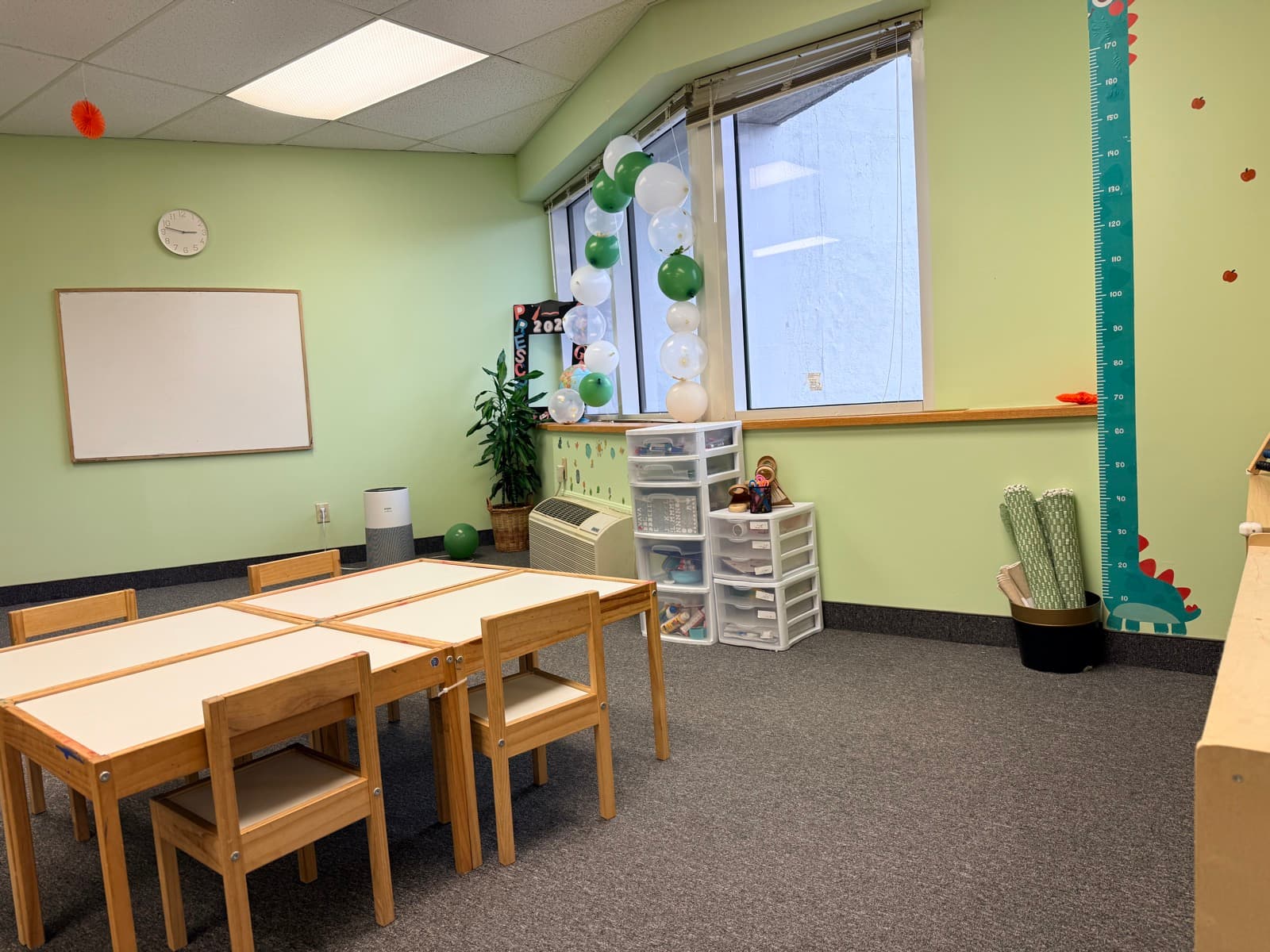
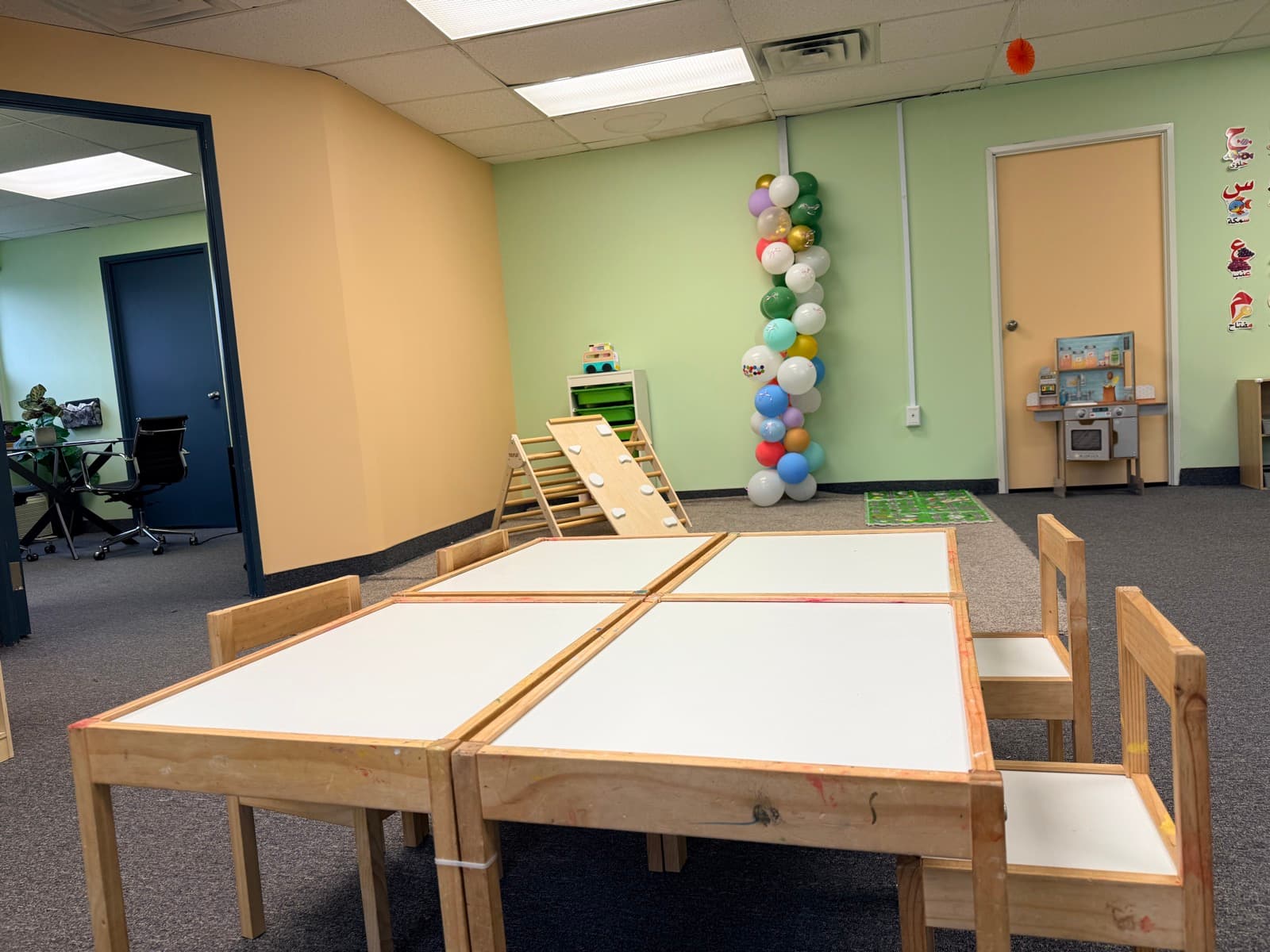
Young children learn through their bodies: pointing, clapping, hand motions and being close to the teacher. In a room, a teacher can notice a wandering child in a second and bring them back with a smile or a turn to recite. On a screen, the same child may slide off the chair, play with the mute button or wander away.
In our classroom experience, children this age do best with short, lively blocks of Quran woven through the day rather than one long lesson. If you use online classes at this age, keep sessions short, sit beside your child, and treat it as a shared activity.
Ages 7–9
Most children can now sit for a focused 20–30 minute lesson, especially one-to-one. This is the age when online classes start to make sense for qaida completion, tajweed and early hifz. Group online classes with many children are still hard; one-to-one or very small groups work better.
Ages 10+
Older children can handle longer online sessions and often appreciate the efficiency. They can also start practising independently between lessons, using recordings or a Quran app for kids to review.
Accountability and consistency
Quran learning depends on steady repetition. The format that keeps your child showing up is usually the right one.
In-person strengths: a fixed time and place, a teacher who expects the lesson to be ready, and peers who are learning the same surah. Children often work harder when classmates are listening.
Online strengths: no travel, so lessons survive snowstorms, busy evenings and trips. Several short sessions a week are easier to schedule than one long drive across the city.
Online risks: it is easy to cancel, start late or let a lesson drift. Ask any online teacher how they track attendance and progress, and whether you get a short written update after each lesson.
Tajweed correction: can online teachers really hear mistakes?
Tajweed is the set of rules for reciting the Quran correctly, including where each letter is pronounced (makharij). A good teacher corrects tiny details: the depth of ع, the heaviness of ص, the length of a madd.
In person, the teacher can hear subtle sounds and see your child’s mouth, tongue and lips up close. This is especially valuable for beginners and for children who still mix up similar letters.
Online, correction is very effective one-to-one, provided:
- Your child uses a headset or sits close to a decent microphone.
- The camera is close enough that the teacher can see the mouth.
- The connection is stable, with minimal lag.
- The teacher stops and corrects rather than letting the child read straight through.
If your child is still learning letter sounds from a primer, see our comparison of Noorani Qaida vs Qaida Baghdadia; an in-person start for the early lessons often pays off later.
Cost: what you are really paying for
Prices vary so widely that any single number would mislead you, so compare on value rather than hourly rate.
- Mosque and community group classes are often the most affordable per hour, but group sizes can be large.
- Structured in-person programs combine Quran with other learning. For example, QAF Sunday Camp in Ottawa (ages 8–15) runs Sundays 11 AM–3 PM with Quran, Arabic, math and STEM, and soccer for $190/month.
- Online group classes are usually cheaper than one-to-one but share the attention problem of large groups.
- Online one-to-one tutoring ranges from low-cost overseas tutors to premium academies. You are paying for undivided attention, so make sure you actually get it.
Hidden costs matter too: driving time and gas for in-person classes, and devices, headsets and supervision time for online ones.
Safety: vetting Quran teachers online and in person
Child safety is the first question, not the last. Both formats can be safe, and both can be unsafe without clear rules.
For in-person teachers and programs
- Ask whether teachers and volunteers have a vulnerable sector check. In Canada, this is a police record check for people working in a position of trust with children; in Ottawa it is handled by the Ottawa Police Service record checks for city residents.
- Ask about supervision: are classes in open rooms, and is more than one adult on site?
- Ask how they handle photos, pick-up and communication with parents.
For online tutors and platforms
- A tutor who lives outside Canada cannot get a Canadian vulnerable sector check. Ask the platform what screening it does instead, and how long it has worked with the tutor.
- Keep lessons in a shared family space, never a closed bedroom, with a parent within earshot.
- Use a platform account you control (your email, your login), and avoid private chat between tutor and child.
- Ask whether lessons are recorded and who can access recordings.
- No personal social media contact between tutor and child, ever.
The Canadian Centre for Child Protection’s parent site, ProtectKidsOnline.ca, has practical guidance on online risks, and Cybertip.ca is Canada’s tip line for reporting online exploitation of children.
Red flags: a tutor who asks for your child’s personal number, suggests lessons without a parent around, asks your child to keep secrets, or resists your watching a lesson. End the arrangement and report concerns.
Screen time and family media habits
The Canadian Paediatric Society’s position statement on digital media for school-aged children does not set a single daily limit. Instead it encourages a family media plan and favours screen use that is educational, active or social over passive scrolling.
A live, interactive Quran lesson fits the “meaningful” category well. Still, if your child already spends a full day on screens for school, an online lesson in the evening can be one screen too many. Watch for fatigue, irritability or resistance, and adjust.
Community and Islamic identity
This is where in-person learning shines. Reciting together, hearing an older child lead a surah, praying in the same room and making Muslim friends all build a sense of belonging that a screen rarely matches.
For young children especially, Quran is learned through relationships. Our post on building Islamic identity in the early years explains why this matters so much before age seven.
Finding Quran classes in Ottawa
Ottawa families can choose from mosque programs, weekend schools, Islamic schools and private tutors. Our guides to Quran classes for kids in Ottawa and weekend Islamic schools in Ottawa list the main local options.
At QAF, our full-day JK and SK program includes Quran (short surahs from Juz Amma), daily Arabic immersion and Islamic Studies in person, and our Sunday Camp offers in-person Quran and Arabic for ages 8 to 15.
The hybrid approach
A hybrid approach combines an in-person class for community, routine and early pronunciation with short online sessions for extra one-to-one practice or revision. It is often the most realistic option for busy families.
Example weekly rhythms:
- Ages 4–6: an in-person program for Quran and Arabic, plus 5–10 minutes of listening and repeating at home each day.
- Ages 8–12: a weekend in-person program, plus one or two short online one-to-one sessions for tajweed or hifz revision.
- Teens: online one-to-one hifz with a qualified teacher, plus regular in-person time at the mosque or a youth program.
If memorization is your goal, our guide to Quran memorization for kids explains how to structure new lessons and revision so the two formats support each other.
Questions to ask any Quran teacher
Whether online or in person, ask these before you commit:
- What is your training in tajweed, and do you hold an ijazah or equivalent qualification?
- How many children are in each class, and how long does each child recite to you?
- Which primer or curriculum do you use, and how do you decide when a child moves on?
- How do you correct mistakes, and how do you keep young children motivated?
- How will you report progress and attendance to me?
- What safety screening have you or your staff completed?
- Can I sit in on or watch a lesson at any time?
- What happens if my child misses a class or falls behind?
A confident, child-focused teacher will welcome these questions.
Final thoughts
For young children, start in person whenever you can: their attention, pronunciation and love for the Quran grow best in a warm room with a teacher and friends. As your child matures, online one-to-one lessons can add focused tajweed and hifz practice. Whatever you choose, insist on clear safety rules and stay involved.
Looking for in-person Quran and Arabic for ages 8–15 in Ottawa? QAF Sunday Camp meets Sundays at 900 Dynes Rd. Learn about Sunday Camp or submit an inquiry to visit.