The best short surahs for kids to learn first are Al-Fatiha, Al-Ikhlas, Al-Falaq and An-Nas, followed by Al-Kawthar, Al-Asr and An-Nasr. They are short, rhythmic and recited every day in salah and in morning, evening and bedtime adhkar, so children hear and use them constantly.
Below you will find a recommended order of 12 short surahs for kids, each with the Arabic text (from the Uthmani script on Quran.com), a simple transliteration, a child-friendly meaning and a practical teaching tip.
Key takeaways
- Start with Al-Fatiha, then Al-Ikhlas, Al-Falaq and An-Nas: they are short and used daily in salah and adhkar.
- Teach by ear first. Young children memorize best by listening and repeating, long before they can read Arabic.
- Use transliteration only as a temporary bridge; correct pronunciation comes from hearing a qualified reciter or teacher.
- Teach the meaning in simple words alongside the words, so each surah feels personal.
- Revise old surahs every day, and add a new one only when the last is solid.
Why start with short surahs from Juz Amma?
Short surahs are the natural starting point because they are easy to memorize, and children can immediately use them in salah. Most come from Juz Amma, the 30th and final part of the Quran, which contains 37 surahs (An-Naba’ to An-Nas). Many families and schools teach Juz Amma first, and many teachers begin with the very last surahs and work backwards.
Two things make these surahs especially valuable for children:
- Salah. The Prophet ﷺ said, “Whoever does not recite Al-Fatiha in his prayer, his prayer is invalid” (Sahih al-Bukhari 756). After Al-Fatiha, a short surah is recited in the first two rak‘at, so every surah your child learns becomes part of their prayer.
- Daily protection. Aishah (may Allah be pleased with her) reported that every night when the Prophet ﷺ went to bed, he would cup his hands, blow into them and recite Al-Ikhlas, Al-Falaq and An-Nas, then wipe over as much of his body as he could, doing this three times (Sahih al-Bukhari 5017). This is a beautiful bedtime routine to share with children.
The recommended order at a glance
| # | Surah | Reference | Ayat | Why at this stage |
|---|---|---|---|---|
| 1 | Al-Fatiha | 1:1–7 | 7 | Recited in every rak‘ah of salah |
| 2 | Al-Ikhlas | 112:1–4 | 4 | Very short, teaches who Allah is |
| 3 | Al-Falaq | 113:1–5 | 5 | Daily protection, pairs with An-Nas |
| 4 | An-Nas | 114:1–6 | 6 | Repeating ending makes it easy |
| 5 | Al-Kawthar | 108:1–3 | 3 | The shortest surah in the Quran |
| 6 | Al-Asr | 103:1–3 | 3 | Short, with a big life lesson |
| 7 | An-Nasr | 110:1–3 | 3 | Gentle rhythm, teaches gratitude |
| 8 | Al-Kafirun | 109:1–6 | 6 | Repetition helps memory |
| 9 | Quraysh | 106:1–4 | 4 | Story of the Prophet’s tribe |
| 10 | Al-Fil | 105:1–5 | 5 | Children love the story |
| 11 | Al-Ma‘un | 107:1–7 | 7 | Teaches kindness to orphans and the poor |
| 12 | Al-Masad | 111:1–5 | 5 | Rhyming endings, a story children remember |
The order is flexible. If your child’s teacher or school uses a different sequence, follow theirs so that home and class reinforce each other.
How to use the transliteration
Transliteration writes Arabic sounds in English letters. It helps parents who do not yet read Arabic support their children, but it cannot capture sounds like ع, ح, ق, ص and ض accurately. Use it as a temporary bridge, always alongside audio from a trusted reciter, and move to the Arabic as soon as your child begins reading. Our guide on Noorani Qaida vs Qaida Baghdadia explains how children learn to read Quranic Arabic.
As a guide: an apostrophe (’) marks a short stop, ‘ marks the throat letter ‘ayn, double vowels (aa, ee, oo) are long, and “dh” sounds like the “th” in “this”.
12 short surahs for kids, in order
Each surah opens with “Bismillahir-Rahmanir-Raheem” (In the name of Allah, the Most Merciful, the Especially Merciful). In Al-Fatiha it is counted as the first ayah; for the other surahs it is recited before the surah begins.
1. Surah Al-Fatiha (The Opening), 1:1–7
بِسْمِ ٱللَّهِ ٱلرَّحْمَـٰنِ ٱلرَّحِيمِ ﴿١﴾ ٱلْحَمْدُ لِلَّهِ رَبِّ ٱلْعَـٰلَمِينَ ﴿٢﴾ ٱلرَّحْمَـٰنِ ٱلرَّحِيمِ ﴿٣﴾ مَـٰلِكِ يَوْمِ ٱلدِّينِ ﴿٤﴾ إِيَّاكَ نَعْبُدُ وَإِيَّاكَ نَسْتَعِينُ ﴿٥﴾ ٱهْدِنَا ٱلصِّرَٰطَ ٱلْمُسْتَقِيمَ ﴿٦﴾ صِرَٰطَ ٱلَّذِينَ أَنْعَمْتَ عَلَيْهِمْ غَيْرِ ٱلْمَغْضُوبِ عَلَيْهِمْ وَلَا ٱلضَّآلِّينَ ﴿٧﴾
Transliteration: Bismillahir-Rahmanir-Raheem (1). Al-hamdu lillahi Rabbil-‘aalameen (2). Ar-Rahmanir-Raheem (3). Maaliki yawmid-deen (4). Iyyaka na‘budu wa iyyaka nasta‘een (5). Ihdinas-siraatal-mustaqeem (6). Siraatal-ladheena an‘amta ‘alayhim, ghayril-maghdoobi ‘alayhim wa lad-daalleen (7).
Meaning for kids: We start in the name of Allah, who is so kind and merciful. All thanks and praise belong to Allah, who takes care of everything in the whole world. He is the King of the Day when everyone is rewarded for what they did. We worship only You, Allah, and we ask only You for help. Please guide us on the straight path, the path of people You blessed, not the path of those who went wrong.
Teaching tip: Teach Al-Fatiha as a conversation with Allah: first we praise Him, then we ask Him for help. Have your child recite it with you in every prayer, even before they pray fully on their own. Our guide on how to teach kids salah shows how to build the prayer step by step.
2. Surah Al-Ikhlas (Sincerity), 112:1–4
قُلْ هُوَ ٱللَّهُ أَحَدٌ ﴿١﴾ ٱللَّهُ ٱلصَّمَدُ ﴿٢﴾ لَمْ يَلِدْ وَلَمْ يُولَدْ ﴿٣﴾ وَلَمْ يَكُن لَّهُۥ كُفُوًا أَحَدٌۢ ﴿٤﴾
Transliteration: Qul huwal-laahu ahad (1). Allahus-samad (2). Lam yalid wa lam yoolad (3). Wa lam yakul-lahu kufuwan ahad (4).
Meaning for kids: Say: Allah is One. Everyone and everything needs Allah, and He needs no one. He has no children and no parents. There is nothing and no one like Him.
Teaching tip: Tell your child about the man who kept reciting this surah, and how the Prophet ﷺ said it is equal to one-third of the Quran (Sahih al-Bukhari 5013). Children love knowing that such a small surah is so special. It also opens wonderful conversations about teaching kids about Allah.
3. Surah Al-Falaq (The Daybreak), 113:1–5
قُلْ أَعُوذُ بِرَبِّ ٱلْفَلَقِ ﴿١﴾ مِن شَرِّ مَا خَلَقَ ﴿٢﴾ وَمِن شَرِّ غَاسِقٍ إِذَا وَقَبَ ﴿٣﴾ وَمِن شَرِّ ٱلنَّفَّـٰثَـٰتِ فِى ٱلْعُقَدِ ﴿٤﴾ وَمِن شَرِّ حَاسِدٍ إِذَا حَسَدَ ﴿٥﴾
Transliteration: Qul a‘oodhu bi Rabbil-falaq (1). Min sharri maa khalaq (2). Wa min sharri ghaasiqin idhaa waqab (3). Wa min sharrin-naffaathaati fil-‘uqad (4). Wa min sharri haasidin idhaa hasad (5).
Meaning for kids: Say: I ask Allah, the Lord of the morning light, to protect me from anything harmful He created, from the dangers of the dark night, from people who try to do magic, and from people who are jealous.
Teaching tip: Keep the meaning reassuring, not frightening. Explain that Allah is stronger than anything scary, and this surah is how we ask Him to keep us safe. Teach Al-Falaq and An-Nas together as a pair for bedtime.
4. Surah An-Nas (Mankind), 114:1–6
قُلْ أَعُوذُ بِرَبِّ ٱلنَّاسِ ﴿١﴾ مَلِكِ ٱلنَّاسِ ﴿٢﴾ إِلَـٰهِ ٱلنَّاسِ ﴿٣﴾ مِن شَرِّ ٱلْوَسْوَاسِ ٱلْخَنَّاسِ ﴿٤﴾ ٱلَّذِى يُوَسْوِسُ فِى صُدُورِ ٱلنَّاسِ ﴿٥﴾ مِنَ ٱلْجِنَّةِ وَٱلنَّاسِ ﴿٦﴾
Transliteration: Qul a‘oodhu bi Rabbin-naas (1). Malikin-naas (2). Ilaahin-naas (3). Min sharril-waswaasil-khannaas (4). Alladhee yuwaswisu fee sudoorin-naas (5). Minal-jinnati wan-naas (6).
Meaning for kids: Say: I ask Allah to protect me. He is the Lord of all people, the King of all people and the God of all people. Protect me from the sneaky whisperer who tries to put bad ideas in people’s hearts, whether from jinn or from people.
Teaching tip: Point out that every ayah ends with “naas”. Let your child say the ending while you recite the start, then swap. It is also a natural way to talk about listening to the good voice inside us and ignoring bad ideas.
5. Surah Al-Kawthar (Abundance), 108:1–3
إِنَّآ أَعْطَيْنَـٰكَ ٱلْكَوْثَرَ ﴿١﴾ فَصَلِّ لِرَبِّكَ وَٱنْحَرْ ﴿٢﴾ إِنَّ شَانِئَكَ هُوَ ٱلْأَبْتَرُ ﴿٣﴾
Transliteration: Innaa a‘taynaakal-kawthar (1). Fasalli li Rabbika wanhar (2). Inna shaani’aka huwal-abtar (3).
Meaning for kids: Allah says to the Prophet ﷺ: We have given you Al-Kawthar, so pray to your Lord and offer a sacrifice for Him. The one who hates you is the one who will be cut off from all good.
Teaching tip: Al-Kawthar is the shortest surah in the Quran, which children find exciting. Share that the Prophet ﷺ described Al-Kawthar as a river in Paradise with banks of hollow pearls (Sahih al-Bukhari 4964), and invite your child to draw it.
6. Surah Al-Asr (Time), 103:1–3
وَٱلْعَصْرِ ﴿١﴾ إِنَّ ٱلْإِنسَـٰنَ لَفِى خُسْرٍ ﴿٢﴾ إِلَّا ٱلَّذِينَ ءَامَنُوا۟ وَعَمِلُوا۟ ٱلصَّـٰلِحَـٰتِ وَتَوَاصَوْا۟ بِٱلْحَقِّ وَتَوَاصَوْا۟ بِٱلصَّبْرِ ﴿٣﴾
Transliteration: Wal-‘asr (1). Innal-insaana lafee khusr (2). Illal-ladheena aamanoo wa ‘amilus-saalihaati wa tawaasaw bil-haqqi wa tawaasaw bis-sabr (3).
Meaning for kids: Allah swears by time. All people are losing, except those who believe, do good deeds, remind each other to do what is right, and remind each other to be patient.
Teaching tip: The third ayah is long, so split it into four chunks: “illal-ladheena aamanoo”, “wa ‘amilus-saalihaat”, “wa tawaasaw bil-haqq”, “wa tawaasaw bis-sabr”. Count the four good things on your fingers together.
7. Surah An-Nasr (The Help), 110:1–3
إِذَا جَآءَ نَصْرُ ٱللَّهِ وَٱلْفَتْحُ ﴿١﴾ وَرَأَيْتَ ٱلنَّاسَ يَدْخُلُونَ فِى دِينِ ٱللَّهِ أَفْوَاجًا ﴿٢﴾ فَسَبِّحْ بِحَمْدِ رَبِّكَ وَٱسْتَغْفِرْهُ ۚ إِنَّهُۥ كَانَ تَوَّابًۢا ﴿٣﴾
Transliteration: Idhaa jaa’a nasrul-laahi wal-fath (1). Wa ra’aytan-naasa yadkhuloona fee deenil-laahi afwaajaa (2). Fasabbih bihamdi Rabbika wastaghfirh, innahoo kaana tawwaabaa (3).
Meaning for kids: When Allah’s help and victory come, and you see people joining Islam in big groups, then praise your Lord, thank Him and ask Him for forgiveness. He always accepts people who come back to Him.
Teaching tip: Use this surah to teach a habit: when something good happens, we say “SubhanAllah” and “Alhamdulillah” and thank Allah instead of showing off. Practise it after a win in a game or a good school day.
8. Surah Al-Kafirun (The Disbelievers), 109:1–6
قُلْ يَـٰٓأَيُّهَا ٱلْكَـٰفِرُونَ ﴿١﴾ لَآ أَعْبُدُ مَا تَعْبُدُونَ ﴿٢﴾ وَلَآ أَنتُمْ عَـٰبِدُونَ مَآ أَعْبُدُ ﴿٣﴾ وَلَآ أَنَا۠ عَابِدٌ مَّا عَبَدتُّمْ ﴿٤﴾ وَلَآ أَنتُمْ عَـٰبِدُونَ مَآ أَعْبُدُ ﴿٥﴾ لَكُمْ دِينُكُمْ وَلِىَ دِينِ ﴿٦﴾
Transliteration: Qul yaa ayyuhal-kaafiroon (1). Laa a‘budu maa ta‘budoon (2). Wa laa antum ‘aabidoona maa a‘bud (3). Wa laa ana ‘aabidum-maa ‘abadtum (4). Wa laa antum ‘aabidoona maa a‘bud (5). Lakum deenukum wa liya deen (6).
Meaning for kids: Say to those who do not believe: I do not worship what you worship, and you do not worship what I worship. You have your religion, and I have mine.
Teaching tip: Ayat 3 and 5 are identical, and ayat 2 and 4 are very similar, which is easy to mix up. Use different hand motions for each ayah. Explain that this surah teaches us to be clear and confident about worshipping only Allah, while being respectful to others.
9. Surah Quraysh, 106:1–4
لِإِيلَـٰفِ قُرَيْشٍ ﴿١﴾ إِۦلَـٰفِهِمْ رِحْلَةَ ٱلشِّتَآءِ وَٱلصَّيْفِ ﴿٢﴾ فَلْيَعْبُدُوا۟ رَبَّ هَـٰذَا ٱلْبَيْتِ ﴿٣﴾ ٱلَّذِىٓ أَطْعَمَهُم مِّن جُوعٍ وَءَامَنَهُم مِّنْ خَوْفٍۭ ﴿٤﴾
Transliteration: Li eelaafi Quraysh (1). Eelaafihim rihlatash-shitaa’i was-sayf (2). Falya‘budoo Rabba haadhal-bayt (3). Alladhee at‘amahum min joo‘in wa aamanahum min khawf (4).
Meaning for kids: Allah made it easy for the tribe of Quraysh to travel safely on their winter and summer trading journeys. So they should worship the Lord of this House, the Ka‘bah, who fed them when they were hungry and kept them safe from fear.
Teaching tip: Quraysh was the Prophet’s own tribe in Makkah. Show your child a picture of the Ka‘bah and talk about the food and safety Allah gives your own family. It is a lovely surah for building gratitude at mealtimes.
10. Surah Al-Fil (The Elephant), 105:1–5
أَلَمْ تَرَ كَيْفَ فَعَلَ رَبُّكَ بِأَصْحَـٰبِ ٱلْفِيلِ ﴿١﴾ أَلَمْ يَجْعَلْ كَيْدَهُمْ فِى تَضْلِيلٍ ﴿٢﴾ وَأَرْسَلَ عَلَيْهِمْ طَيْرًا أَبَابِيلَ ﴿٣﴾ تَرْمِيهِم بِحِجَارَةٍ مِّن سِجِّيلٍ ﴿٤﴾ فَجَعَلَهُمْ كَعَصْفٍ مَّأْكُولٍۭ ﴿٥﴾
Transliteration: Alam tara kayfa fa‘ala Rabbuka bi ashaabil-feel (1). Alam yaj‘al kaydahum fee tadleel (2). Wa arsala ‘alayhim tayran abaabeel (3). Tarmeehim bihijaaratim-min sijjeel (4). Faja‘alahum ka‘asfim-ma’kool (5).
Meaning for kids: Have you heard what Allah did to the army with the elephant that came to destroy the Ka‘bah? Allah ruined their plan. He sent flocks of birds that threw small stones of hard clay at them, and the army was left like chewed-up straw.
Teaching tip: Tell the story first, then teach the surah. Children remember Al-Fil quickly once they can picture the elephant and the birds. The event is traditionally linked to the year the Prophet ﷺ was born, known as the Year of the Elephant.
11. Surah Al-Ma‘un (Small Kindnesses), 107:1–7
أَرَءَيْتَ ٱلَّذِى يُكَذِّبُ بِٱلدِّينِ ﴿١﴾ فَذَٰلِكَ ٱلَّذِى يَدُعُّ ٱلْيَتِيمَ ﴿٢﴾ وَلَا يَحُضُّ عَلَىٰ طَعَامِ ٱلْمِسْكِينِ ﴿٣﴾ فَوَيْلٌ لِّلْمُصَلِّينَ ﴿٤﴾ ٱلَّذِينَ هُمْ عَن صَلَاتِهِمْ سَاهُونَ ﴿٥﴾ ٱلَّذِينَ هُمْ يُرَآءُونَ ﴿٦﴾ وَيَمْنَعُونَ ٱلْمَاعُونَ ﴿٧﴾
Transliteration: Ara’aytal-ladhee yukadhdhibu bid-deen (1). Fadhaalikal-ladhee yadu‘‘ul-yateem (2). Wa laa yahuddu ‘alaa ta‘aamil-miskeen (3). Fawaylul-lil-musalleen (4). Alladheena hum ‘an salaatihim saahoon (5). Alladheena hum yuraa’oon (6). Wa yamna‘oonal-maa‘oon (7).
Meaning for kids: Do you know the person who denies the Day of Judgement? He pushes away orphans and does not encourage feeding poor people. And it is bad for those who pray but do not care about their prayer, who only do good to show off, and who refuse to help others even with small things.
Teaching tip: Connect this surah to action. Pack an extra snack to share, help collect food for a food bank, or lend a toy. Explain that Allah cares about how we treat people as well as how we pray.
12. Surah Al-Masad (The Palm Fibre), 111:1–5
تَبَّتْ يَدَآ أَبِى لَهَبٍ وَتَبَّ ﴿١﴾ مَآ أَغْنَىٰ عَنْهُ مَالُهُۥ وَمَا كَسَبَ ﴿٢﴾ سَيَصْلَىٰ نَارًا ذَاتَ لَهَبٍ ﴿٣﴾ وَٱمْرَأَتُهُۥ حَمَّالَةَ ٱلْحَطَبِ ﴿٤﴾ فِى جِيدِهَا حَبْلٌ مِّن مَّسَدٍۭ ﴿٥﴾
Transliteration: Tabbat yadaa Abee Lahabin wa tabb (1). Maa aghnaa ‘anhu maaluhoo wa maa kasab (2). Sayaslaa naaran dhaata lahab (3). Wamra’atuhoo hammaalatal-hatab (4). Fee jeedihaa hablum-mim-masad (5).
Meaning for kids: Abu Lahab, who tried to hurt the Prophet ﷺ, is ruined. His money and everything he gained cannot help him. He will enter a blazing fire, and so will his wife, who carried thorny wood to hurt the Prophet ﷺ, with a rope of twisted fibre around her neck.
Teaching tip: Abu Lahab was the Prophet’s uncle who chose to oppose him. Keep the focus on the lesson that being rich or important does not help someone who works against the truth. Children enjoy the rhyming endings (lahab, kasab, lahab, hatab, masad), so clap along to the rhythm.
What to learn after these 12 surahs
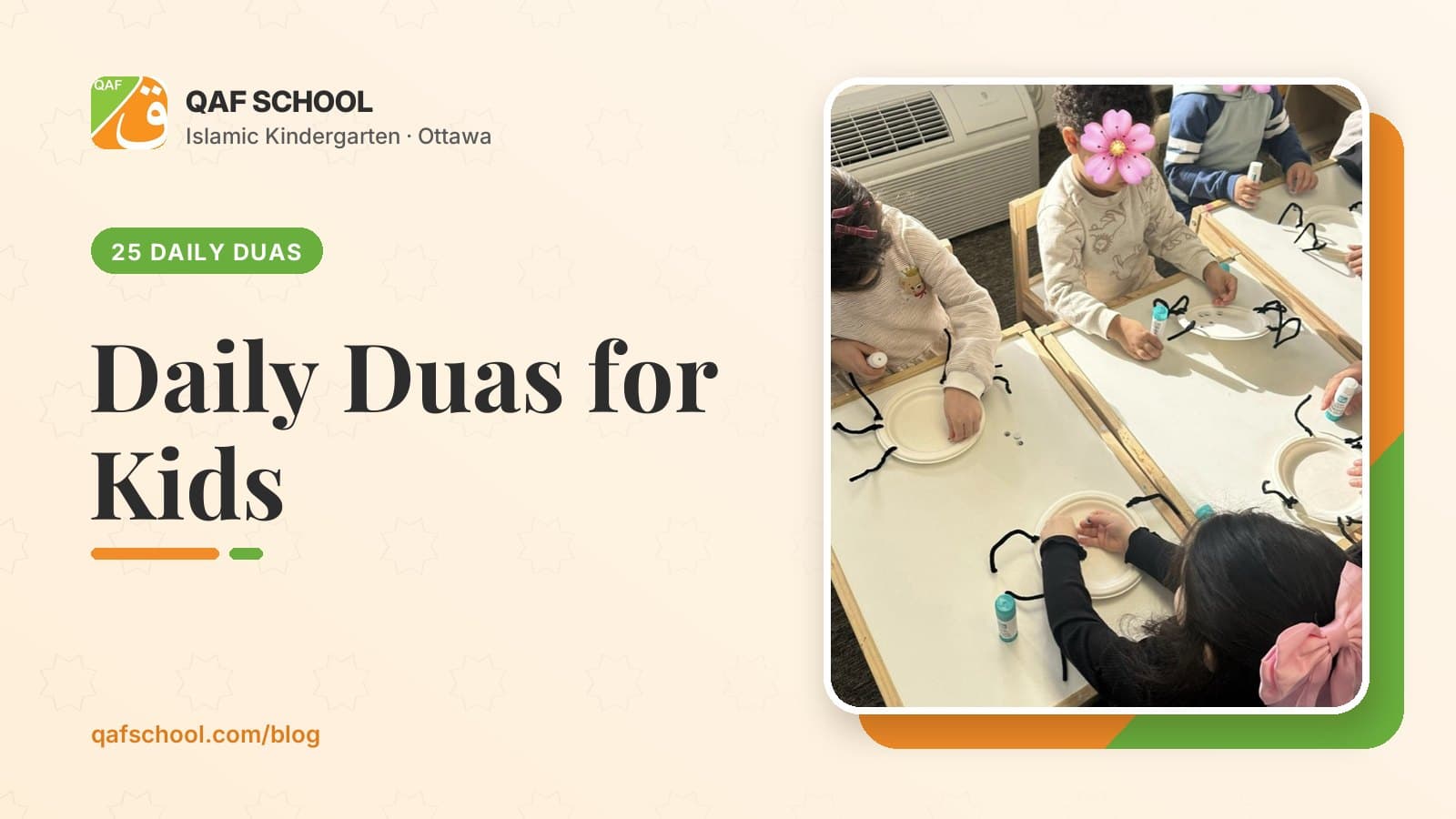
Once your child knows these well, continue backwards through Juz Amma with Al-Humazah (104), At-Takathur (102), Al-Qari‘ah (101), Al-‘Adiyat (100) and Az-Zalzalah (99). Many children also learn Ayat al-Kursi (Al-Baqarah 2:255) early, because the Prophet ﷺ confirmed that reciting it when going to bed brings Allah’s protection through the night (Sahih al-Bukhari 2311). For more bedtime and everyday adhkar, see our list of daily duas for kids.
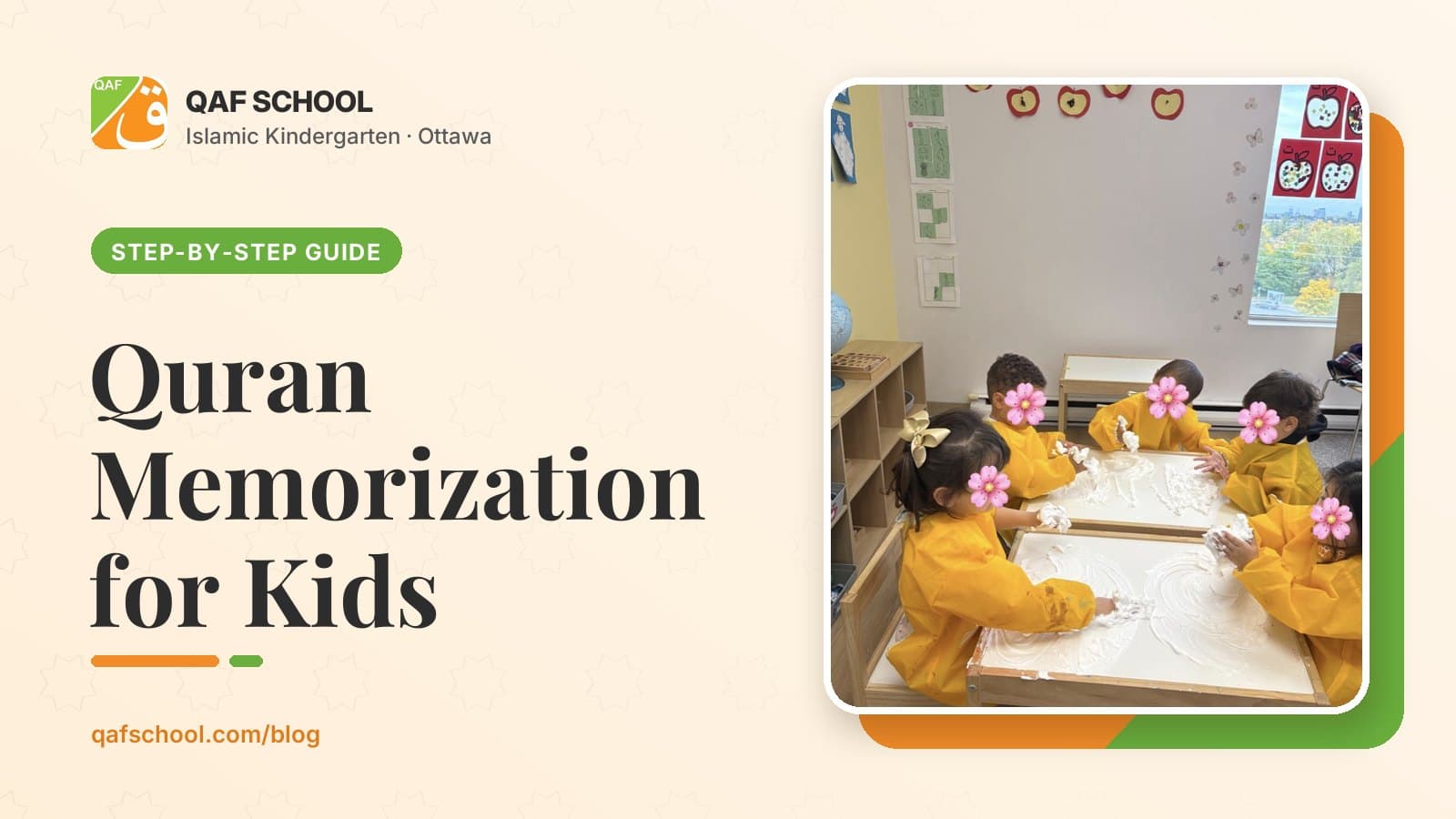
For a full plan on pacing, revision and tracking progress, read our step-by-step guide to Quran memorization for kids.
Tips for teaching short surahs to kids
- Listen first. Play one surah from a single, clear reciter for several days before your child tries to recite it.
- One ayah at a time. Add the next ayah only when the current one is smooth, then recite from the beginning.
- Use hand motions. Simple gestures for key words (“ahad” = one finger, “naas” = arms wide for people) anchor memory.
- Recite in salah. Invite your child to recite their newest surah aloud when praying with you.
- Revise daily. Begin each session with two or three older surahs before anything new.
- Explain the meaning. Even one sentence of meaning makes each surah more personal and easier to remember.
- Celebrate. A sticker chart of these 12 surahs, coloured in one by one, is very motivating.
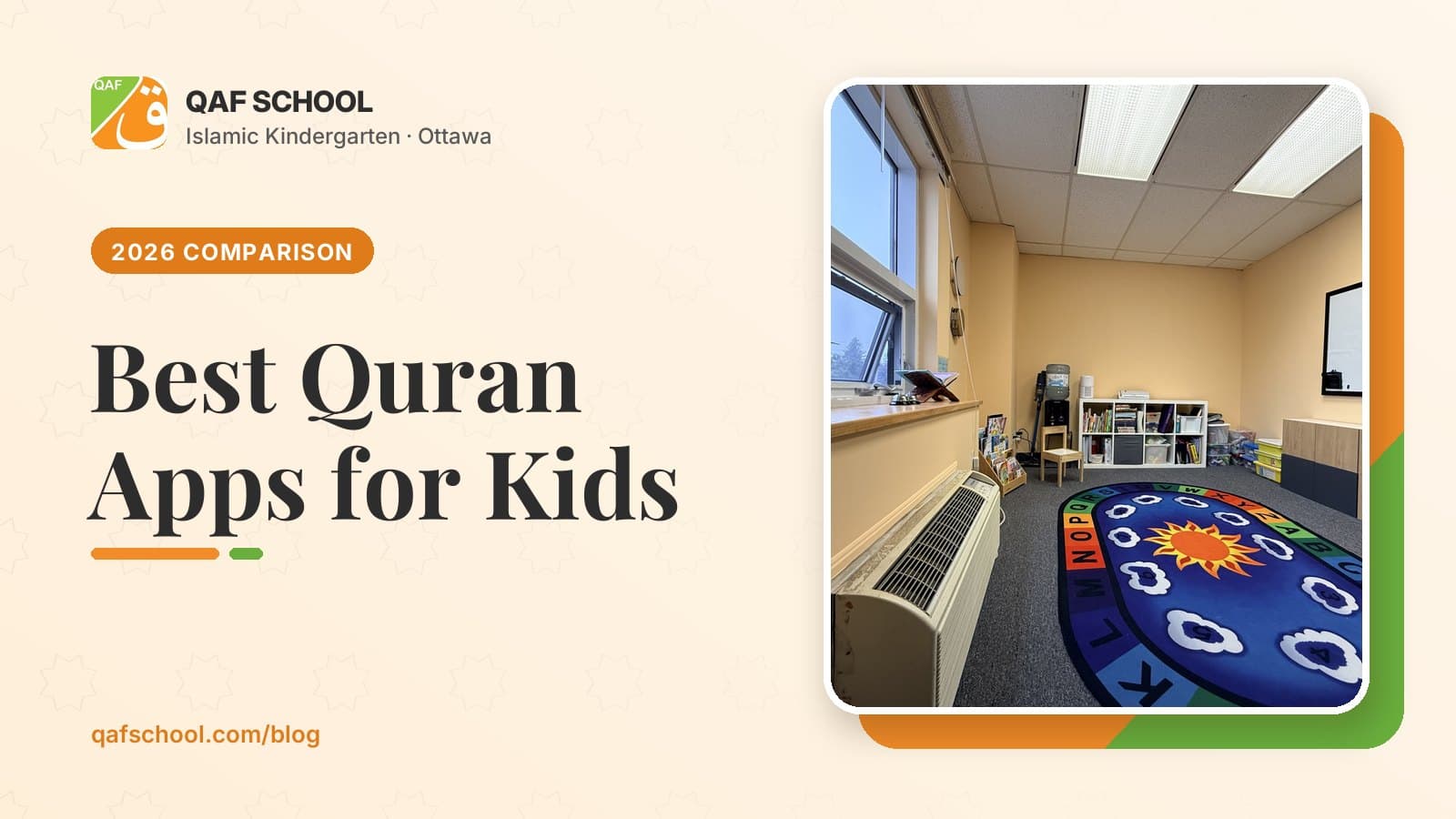
Tip: Apps can help with listening and repetition, but they cannot correct pronunciation the way a teacher can. See our review of the best Quran apps for kids for teacher-friendly options.
Learning short surahs in Ottawa
At QAF, short surahs from Juz Amma are part of every day in our full-day Islamic JK and SK kindergarten program, together with duas, adab, Islamic Studies and daily Arabic immersion. Children recite together, learn the meanings through stories and activities, and parents can follow along through ClassDojo updates and practise at home.
If you are looking for Quran classes for older children in Ottawa, see our guide to Quran classes for kids in Ottawa.
Final thoughts
Start with Al-Fatiha, Al-Ikhlas, Al-Falaq and An-Nas, then move through the list one surah at a time. Teach by ear, explain the meaning simply, revise every day and make each new surah a celebration. Within a year or two, many children carry a treasury of surahs they will recite for the rest of their lives.
Want your child to learn Quran and Arabic in a warm Islamic setting? QAF’s full-day JK/SK program in Ottawa includes daily short surahs from Juz Amma. Submit an inquiry to book a visit.