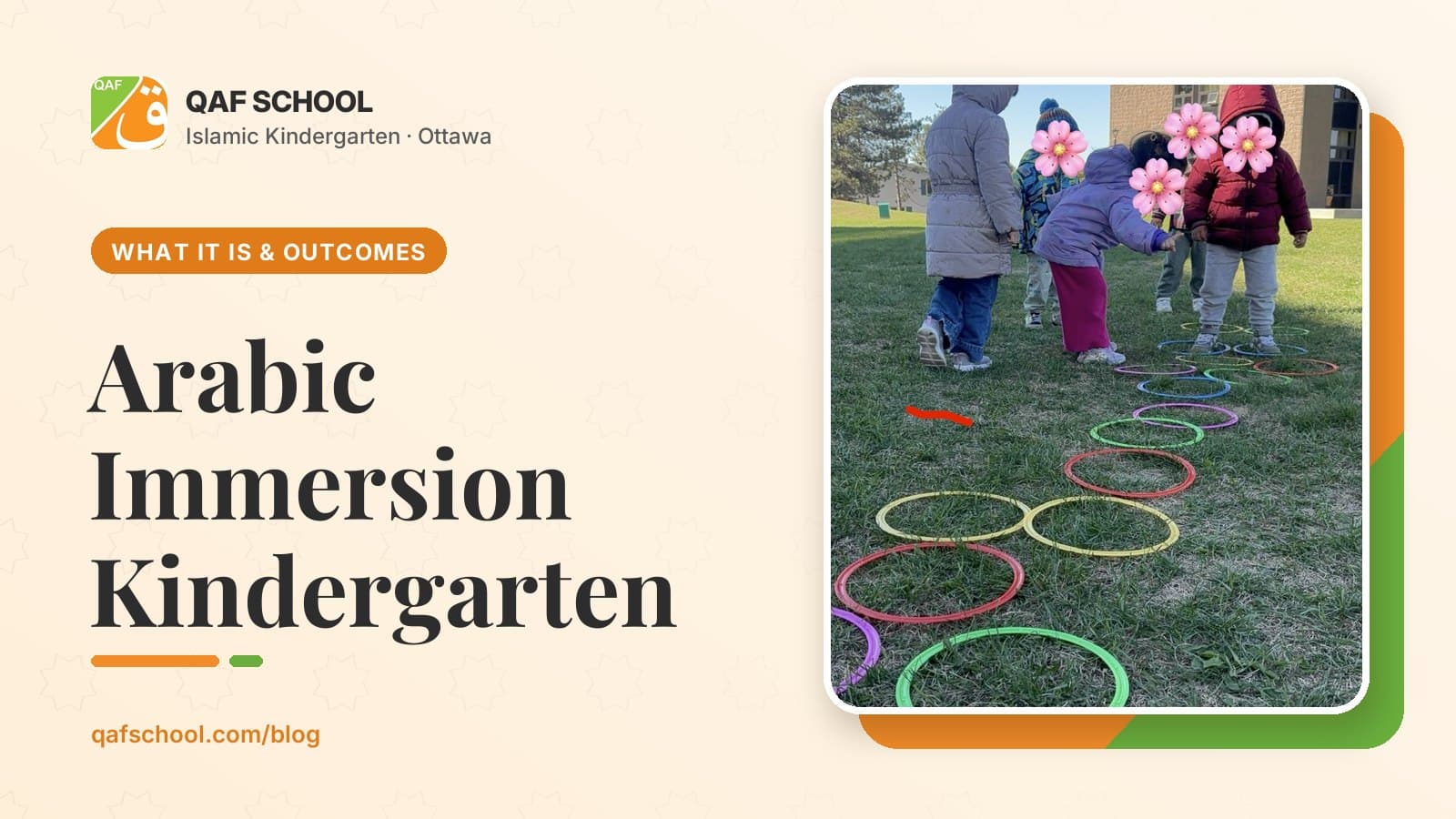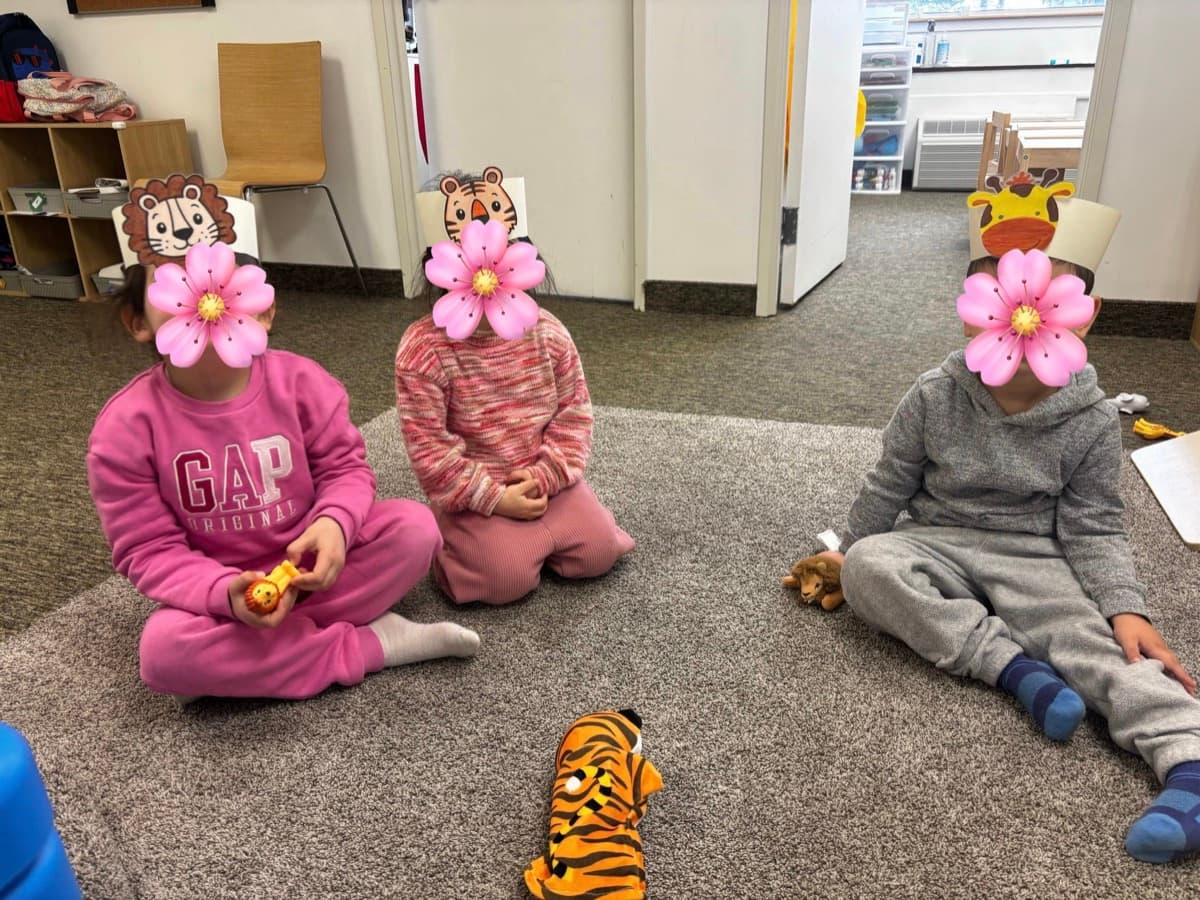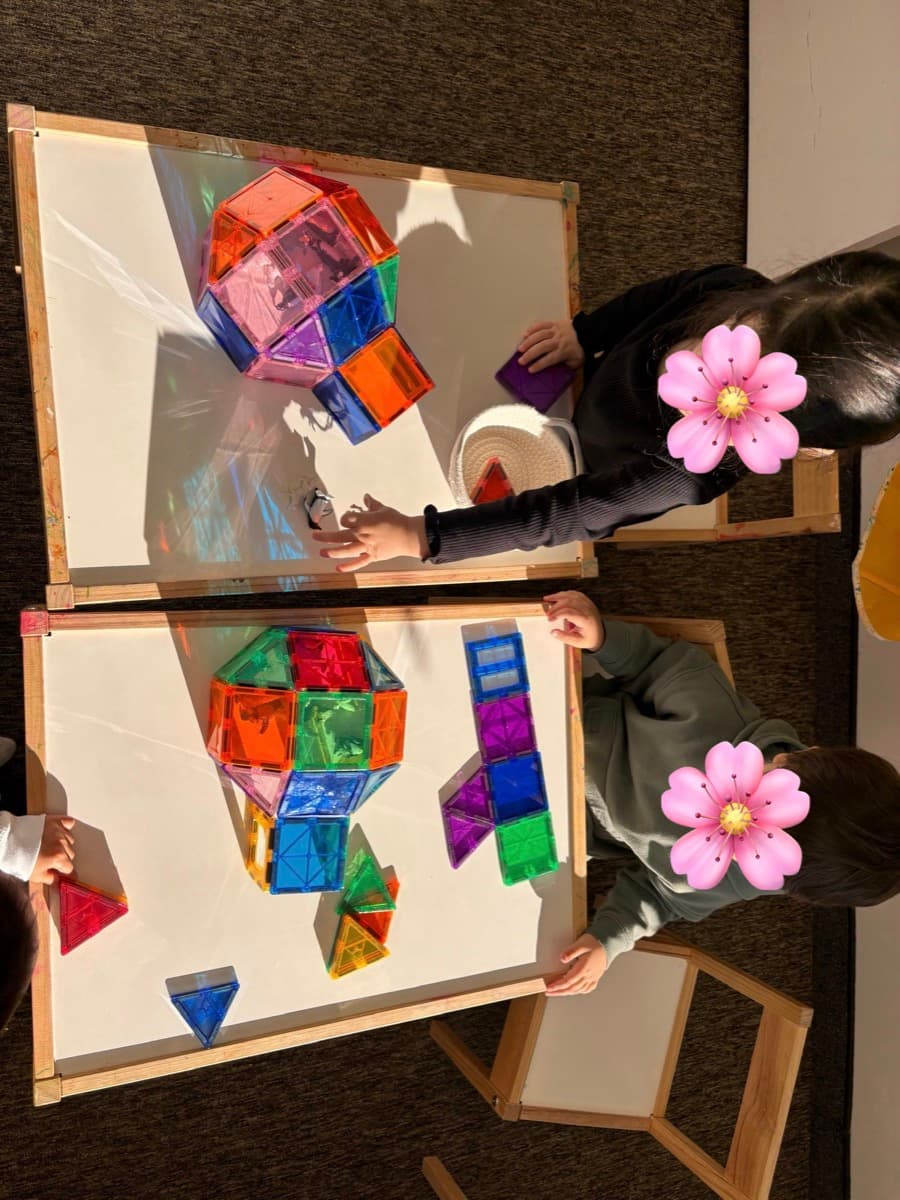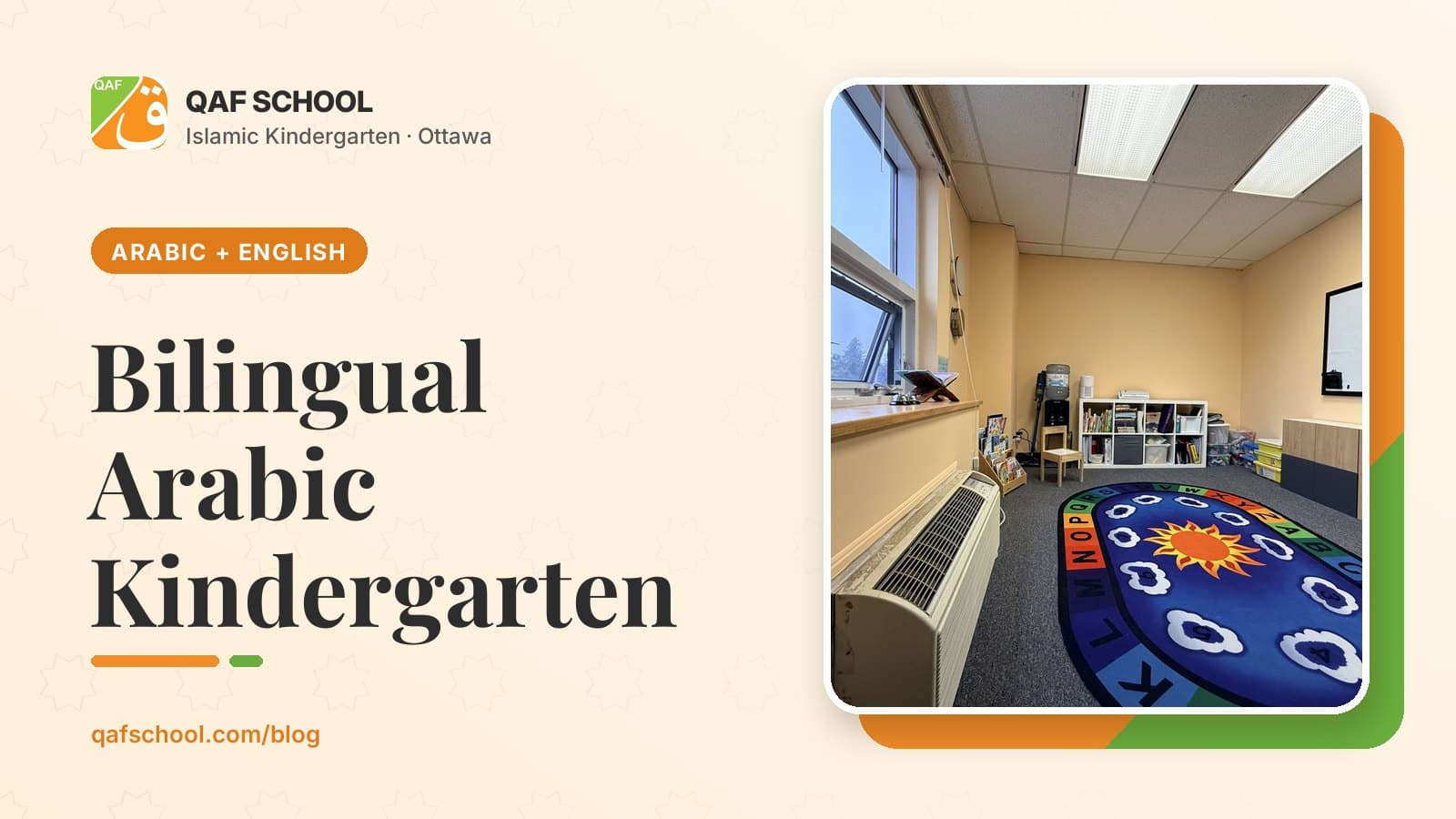
A bilingual Arabic English kindergarten is a JK/SK program where children learn in both languages every day: English for most of the Ontario curriculum, and Arabic for routines, songs, stories, Quran and dedicated language time. Done well, children leave kindergarten ready for an English-language Grade 1 while understanding everyday Arabic and recognizing their letters. This guide explains how these programs are structured, what progress looks like in each language, and how to support both at home.
Key takeaways
- "Bilingual" means both languages have a planned place in the day, not just a weekly Arabic class.
- Learning two languages does not confuse children or cause language delays, according to speech-language professionals.
- Expect children to understand Arabic well before they speak it, and to mix words from both languages. Both are normal.
- English matters too: a good bilingual program still prepares children for Ontario Grade 1 reading and writing.
- What you do at home, especially keeping your family's home language strong, shapes results as much as the school.
What is a bilingual Arabic English kindergarten?
A bilingual Arabic English kindergarten uses two languages of instruction on purpose. Children hear and use both languages daily, in planned proportions, with clear routines for when each one is used.
That sets it apart from two other common set-ups:
| Model | How much Arabic | Typical goal |
|---|---|---|
| English kindergarten with Arabic class | 20–45 minutes a few times a week | Basic vocabulary and letters |
| Bilingual Arabic-English kindergarten | Significant daily time, built into routines and lessons | Comfort in both languages; ready for English Grade 1 |
| Arabic immersion kindergarten | Arabic as the main working language for much of the day | Stronger Arabic comprehension and speaking |
The lines between bilingual and immersion programs blur in practice, and many schools describe themselves with both words. If you want the deeper picture of immersion specifically, read our guide to Arabic immersion kindergarten. This post focuses on balancing the two languages.
Why families choose a bilingual Arabic-English program
Arabic is a growing language in Canada. Statistics Canada's 2021 Census found that the number of people speaking Arabic most often at home grew by 28% to 286,000 since 2016. For many Ottawa families, Arabic is the language of grandparents, of the Quran and of faith.
Families usually have one of three goals:
- Keeping a heritage language alive. Children of Arabic-speaking parents often start answering in English once school begins. A bilingual kindergarten gives Arabic daily status outside the home.
- Opening the door to the Quran. For non-Arab Muslim families, early Arabic makes later Quran reading and understanding much easier. Our post on Arabic for non-Arab Muslim kids covers this in detail.
- Raising a confidently bilingual child who moves between languages naturally, with English kept fully on track.
The research case for starting early is covered in why early Arabic immersion matters.
How children learn two languages at once
Young children are well equipped to learn two languages. The Communication Health Support Association, drawing on ASHA guidance, states plainly that using multiple languages does not confuse children or cause speech or language delays. If a child has a genuine language difficulty, it shows up in all their languages, and a speech-language pathologist can help.
What to expect: understanding before speaking
Children who meet a new language at school often go through a quiet stage. The Canadian Paediatric Society's Caring for Kids New to Canada describes a "silent" period that can last three to six months, while the child listens and absorbs. Early skills in a second language usually develop within six months to two years of exposure.
In kindergarten, you will typically see this pattern:
- Your child follows Arabic routines ("sit down," "line up," "wash hands") within weeks.
- They join in songs and repeated phrases before they make their own sentences.
- Single words appear, often mixed into English sentences.
- Short phrases and answers to simple questions follow.
Mixing languages is normal
A child who says "I want the ahmar one" (the red one) is not confused. Blending words from two languages is an expected part of learning. Children sort the languages out as their vocabulary grows.
What a bilingual day can look like
Schools organize bilingual time differently. These are the most common approaches, and many programs combine them.
By routine
Some parts of the day always happen in Arabic: morning greetings, the date and weather, duas before eating, tidy-up songs. Routines repeat daily, so children learn the language through context.
By teacher
One adult speaks mainly Arabic and the other mainly English. Children quickly learn which language to use with whom, the same way children in bilingual homes do.
By subject or block
Arabic language, Quran and Islamic Studies run in Arabic-rich blocks, while early literacy and mathematics run mainly in English, so children stay on track with the Ontario curriculum.
Throughout play
In strong programs, Arabic is not limited to lessons. Teachers name materials, describe what children are doing and ask simple questions in Arabic during free play, which is where most real language learning happens.
When you visit, ask the school to walk you through a typical day and say which parts happen in which language.
Realistic goals by the end of SK
Every child is different, and progress depends heavily on the home language. These are reasonable expectations after two years in a well-run bilingual program.
| Skill | English | Arabic |
|---|---|---|
| Listening | Follows multi-step instructions and stories | Understands classroom routines, familiar stories and simple questions |
| Speaking | Full conversations, retells events | Greetings, needs, short answers and phrases; more for Arabic-speaking homes |
| Letters and sounds | Most letter names and sounds; early reading | Recognizes most letters and their sounds; begins joining simple letters |
| Writing | Writes name and simple words | Traces and copies letters; may write own name in Arabic |
| Faith-related | — | Several short surahs, daily duas, Islamic greetings |
Fluent Arabic conversation by age six is unusual for children from English-speaking homes, and that is fine. Kindergarten builds the foundation; consistent practice through the primary years builds fluency.
Will a bilingual program slow down my child's English?
This is the most common worry, and the answer for most children is no. Ontario's kindergarten curriculum includes foundations of language and mathematics as a core strand, and a good bilingual program still covers it. Children who are surrounded by English in the wider community, on screens and with friends usually keep developing English quickly.
Three things to check:
- Is early English literacy explicitly taught? Look for phonological awareness, letter sounds and lots of read-alouds.
- How is progress tracked and reported in both languages?
- How does the program prepare children for Grade 1? Our guide to preparing your child for Grade 1 explains what teachers expect.
If your child has a diagnosed speech or language delay, speak with your child's speech-language pathologist. Current guidance from the Canadian Paediatric Society does not recommend dropping a language because of a delay, but individual advice matters.
Supporting both languages at home
What happens at home has a big effect on bilingual outcomes. The right approach depends on your family.
If you speak Arabic at home
Keep speaking it. The Canadian Paediatric Society encourages parents to use their home language, noting that parents offer the best language models in the language they know best. Let school build English and academic Arabic, and keep home rich in everyday Arabic: stories, songs, cooking talk, calls with grandparents. If you are wondering which form of Arabic to use, see our guide to fusha vs dialect for kids.
If you speak English (or another language) at home
You do not need to be fluent to help. Learn the classroom songs and duas alongside your child, use a few Arabic routine words at home (water, door, thank you), and read picture books with Arabic text. Our guide to teaching Arabic at home has practical ideas.
If your family speaks a third language
Many Ottawa Muslim families speak Somali, Urdu, Farsi, French or another language at home. Your child can handle three languages; keep the home language strong and let school carry Arabic and English. Our post on raising trilingual kids in Canada goes deeper.
Bilingual Arabic options in Ottawa
Ottawa families have several routes to Arabic in the early years: weekday Islamic schools with daily Arabic, weekend schools, mosque programs and public international languages classes. Our guide to Arabic classes for kids in Ottawa compares them, and our overview of Islamic schools in Ottawa lists weekday options.
A weekday program gives children the daily exposure that makes the biggest difference at this age. Weekend classes are a good alternative when a weekday Islamic school is not practical, especially for older children.
Is QAF right for your family?
QAF is a full-day Islamic JK/SK for four- and five-year-olds at 900 Dynes Rd in Nepean, Monday to Friday, 9:00 AM to 3:00 PM, September to June. Daily Arabic immersion runs alongside a program aligned with Ontario's kindergarten curriculum, together with Quran from Juz Amma, Islamic Studies, duas and adab, and a Montessori-inspired morning work cycle. Tuition is $690 per month for ten months plus a $190 annual resource fee.
QAF suits families who want Arabic to be part of every school day, whether Arabic is spoken at home or not, and who can reach Nepean comfortably. It is not the right fit if your child is outside the 4–5 age range; for ages 8 to 15, our Sunday Camp includes Arabic reading and writing. Families far from Nepean may be better served by a closer weekday school or a weekend program. When you visit, ask us how Arabic and English are balanced across the day. Read more about our Islamic kindergarten program.
Want to see Arabic and English in action? Submit an inquiry to book a visit to the JK/SK classroom, or call or WhatsApp us with your questions.