Maria Montessori believed that children learn best when they are given the freedom to explore purposeful materials at their own pace, in a carefully prepared environment. This vision resonates deeply with the Islamic concept of fitrah, the idea that every child is born with a natural disposition toward truth, beauty, and their Creator. Our job as educators is not to impose knowledge but to create the conditions where a child’s fitrah can unfold.
What is Tarbiyah?
Tarbiyah comes from the Arabic root “r-b-w,” which means to grow, to nurture, to increase. In the Islamic tradition, tarbiyah refers to the holistic development of a child: body, mind, heart, and soul. It is not simply education in the Western sense. It is the careful, patient cultivation of a human being who is connected to their Creator, grounded in good character, and equipped with the knowledge and skills they need to thrive.
At QAF, tarbiyah is not a subject. It is the lens through which everything else is viewed. When a child learns to pour water carefully from one container to another (a classic Montessori practical life exercise), they are not just developing fine motor skills. They are practicing patience, care, and intention. When they learn to clean up their workspace before moving to a new activity, they are learning responsibility and respect for shared spaces. You can read more about our philosophy on the About page.
The Montessori Method: Key Principles We Use
We are selective about which elements of the Montessori method we adopt. We focus on the principles that align most naturally with our Islamic mission and with the developmental needs of 4- and 5-year-olds:
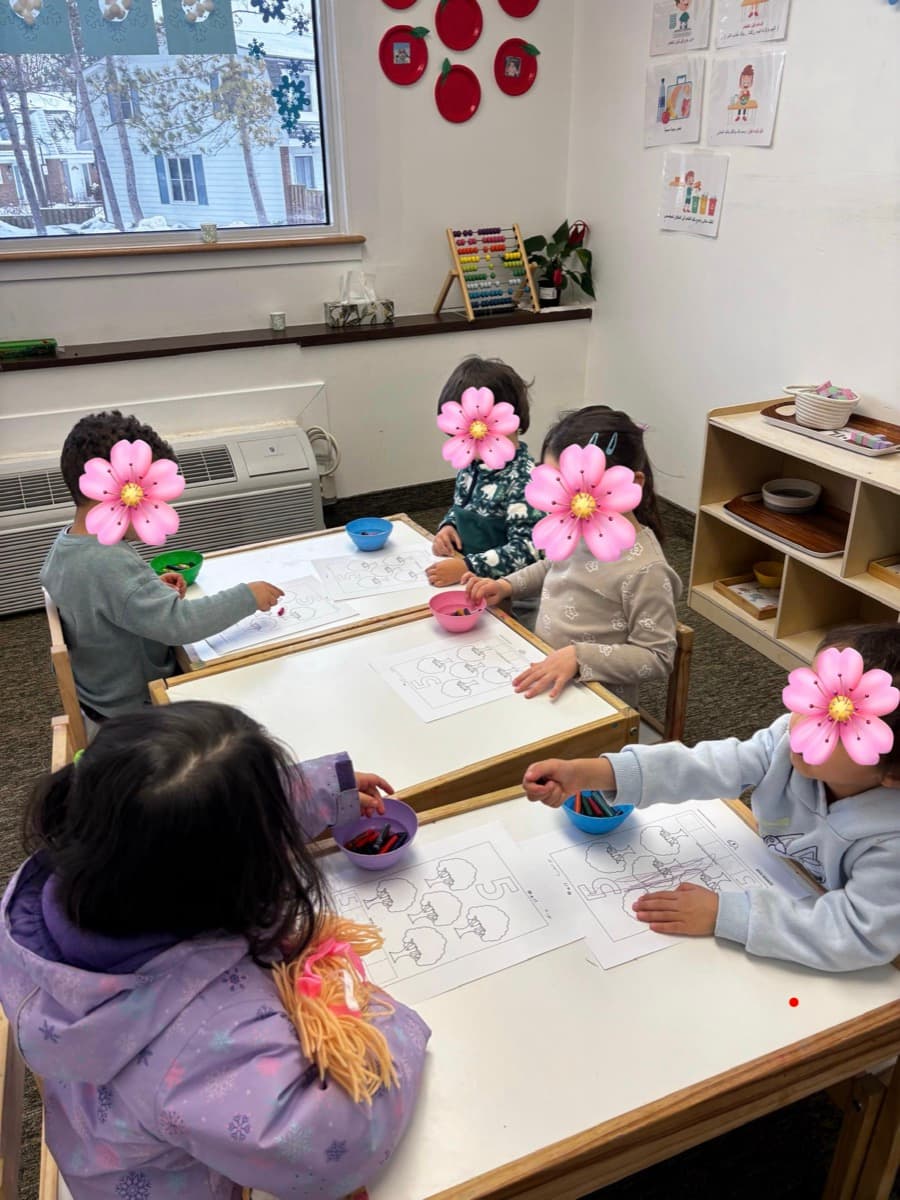
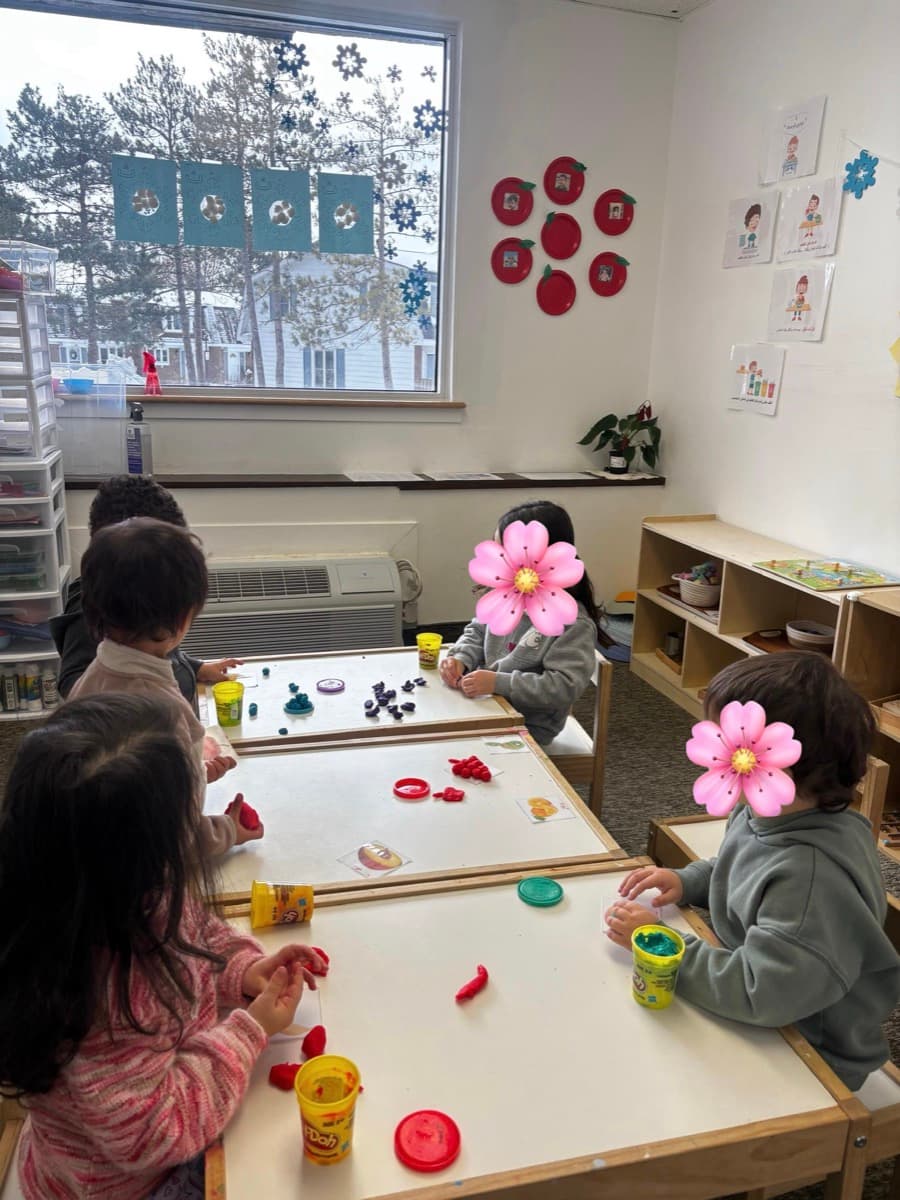
- The Prepared Environment: Our classroom is organized with child-sized furniture, open shelves, and clearly defined zones for different types of work. Materials are accessible and inviting.
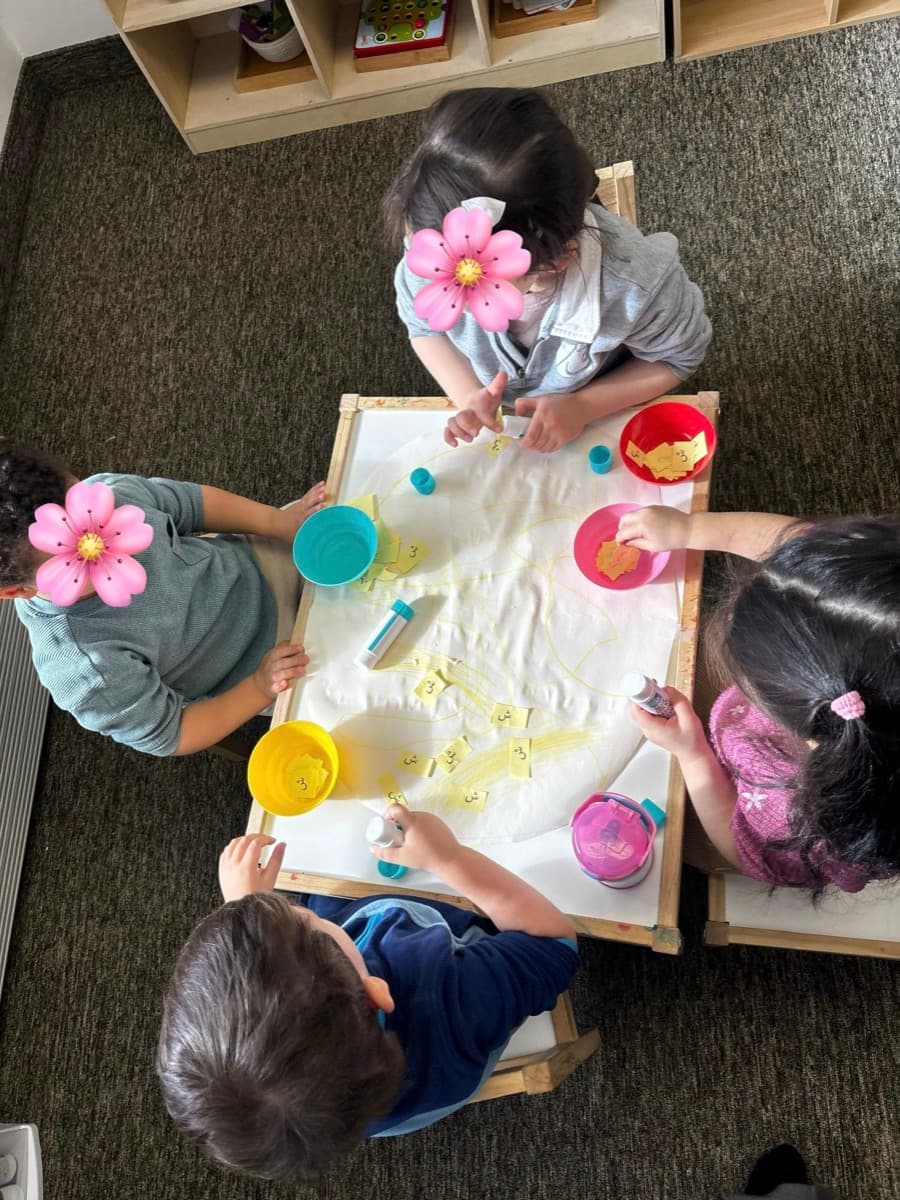
- Long Work Cycles: Children are given extended, uninterrupted periods (typically 9:20 to 11:00 AM) to choose their work and engage deeply with it. This builds concentration and self-direction.
- Practical Life Activities: Pouring, buttoning, sweeping, folding, and caring for the classroom. These activities build independence, coordination, and a sense of responsibility.
- Observation Before Instruction: Our educators observe each child carefully before intervening. We guide rather than direct, and we trust the child's developmental timeline.
- Mixed-Age Interaction: JK and SK students share a classroom, allowing older children to mentor younger ones and younger children to learn from peers.
Where Montessori and Islam Converge
The parallels between Montessori philosophy and Islamic educational values are striking. Both traditions emphasize respect for the child as a whole person. Both value the environment as a teacher. Both prioritize intrinsic motivation over external rewards. And both recognize that true learning happens not through passive reception but through active, purposeful engagement with the world.
Explore the details of what your child will learn in our JK/SK Program page, including the Ontario curriculum framework and learning outcomes.
Why We Say “Montessori-Inspired”
We say “Montessori-inspired” because we also teach to Ontario’s Kindergarten Program, and we integrate Islamic Studies, Quran, and Arabic in ways the classical Montessori curriculum does not include. What we take from Montessori is the philosophy: observe the child, prepare the environment, and trust the process. What we add is the Islamic framework that gives that process its deepest meaning. Visit our FAQ page for more details about our approach.
Curious how this looks in practice? Submit an inquiry and see our prepared environment, meet our educators, and watch how tarbiyah comes alive in a Montessori-inspired classroom.