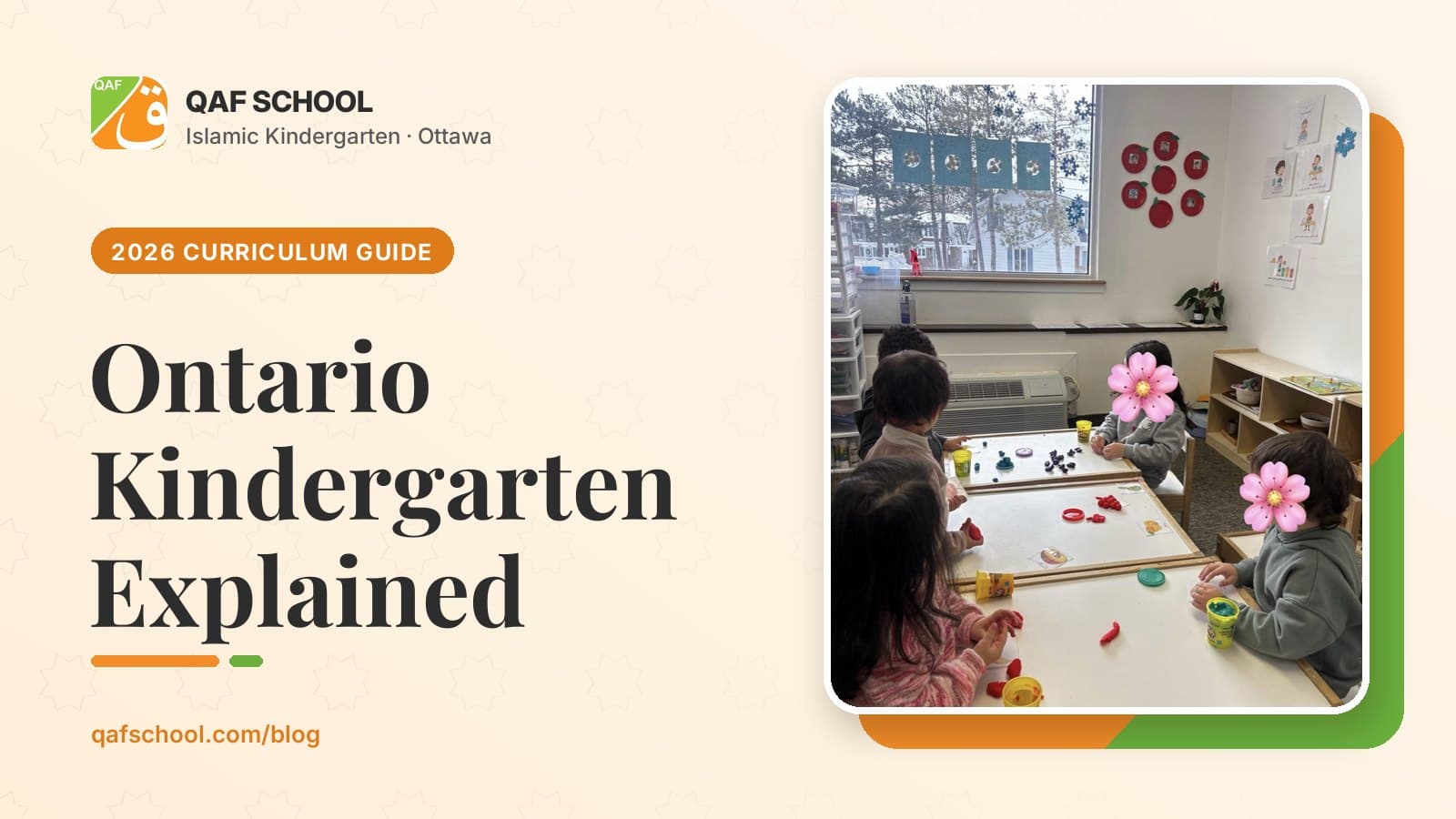
The Ontario Kindergarten Program is the provincial curriculum that every publicly funded JK and SK classroom follows, and it changed this year. Starting in the 2026–27 school year, The Ontario Curriculum, Kindergarten, 2026 replaced The Kindergarten Program, 2016. Learning is still play-based and organized into four areas, but early reading, writing and math are now taught more explicitly. Here is what that means for your child, in plain language.
Key takeaways
- Ontario kindergarten is a free, two-year program (JK and SK) for children aged 4 and 5, taught through play and inquiry.
- The 2016 program's four frames have become four strands in the 2026 curriculum, with very similar names.
- The biggest change is explicit, systematic teaching of early reading (sounds, letters, simple words) plus stronger math, science and coding.
- Classes with more than 16 children are led by a teacher and an early childhood educator working as a team.
- Parents receive three formal reports a year, starting with an initial observations report in late October or November.
What is the Ontario Kindergarten Program?
The Ontario Kindergarten Program is the Ministry of Education's curriculum for Junior Kindergarten (Year 1) and Senior Kindergarten (Year 2). It sets out what children are expected to learn and how educators should teach it in every public, Catholic and French-language board school in the province. Ontario describes kindergarten as a free 2-year program for children aged 4 and 5; attendance becomes compulsory only in September of the year a child turns six.
Ontario moved to full-day kindergarten starting in 2010, with the 2016 Kindergarten Program guiding classrooms for a decade. The new Ontario Curriculum, Kindergarten, 2026 was released in December 2025 and took effect in September 2026.
If you are still deciding when and where to register, our junior kindergarten guide for Ottawa covers age cutoffs and timelines. This post explains what happens inside the classroom.
From four frames to four strands
The 2016 program organized learning into four "frames." The 2026 curriculum calls them "strands" and labels them A to D. If you have an older child who went through kindergarten before 2026, the categories will look familiar.
| 2016 Kindergarten Program (frames) | 2026 Kindergarten Curriculum (strands) | What it covers |
|---|---|---|
| Demonstrating Literacy and Mathematics Behaviours | A. Foundations of Language and Mathematics | Talking, listening, early reading and writing, number sense, patterns, shapes, measurement |
| Problem Solving and Innovating | B. Problem Solving and Innovating | Curiosity, creativity, inquiry, early science and technology |
| Self-Regulation and Well-Being | C. Self-Regulation and Well-Being | Managing emotions and attention, physical activity, healthy routines |
| Belonging and Contributing | D. Belonging and Contributing | Relationships, identity, community, caring for others and the environment |
The other important shift is status. The 2016 document was widely described as a pedagogical framework. The 2026 document is a curriculum policy with mandatory learning expectations, which means more consistency between classrooms and schools.
What changed in 2026, and what stayed the same
What changed
- Explicit early reading instruction. Children are now taught phonemic awareness (hearing and blending sounds), letter–sound relationships, reading and spelling simple words, and reading short sentences with growing fluency. Queen's University researchers describe this as the most substantive change, and link it to the Ontario Human Rights Commission's Right to Read inquiry.
- Stronger math. Expectations include counting, comparing and estimating with numbers to 20, adding and subtracting within 10, and early fractions through equal sharing.
- Science, technology and coding. Children follow and create simple sequences of steps (early coding) and take part in investigations and simple engineering design.
- More explicit teaching overall. Educators are expected to model skills, give guided practice and feedback, and monitor progress.
What stayed the same
- Play is still central. The province says play-based learning, supported by teachers and early childhood educators, remains a key feature of full-day kindergarten.
- Inquiry is still how children explore. Children still ask questions, investigate and share what they discovered.
- The whole child still matters. Social-emotional growth, well-being and belonging sit alongside academics, with equal weight in reporting.
How play-based learning works in kindergarten
Play-based learning means children build academic and social skills through purposeful play, with educators designing the environment and joining in to extend thinking. It is not "just playing." The 2026 curriculum describes three kinds of play along a continuum:
- Student-directed play. Children choose and lead, with educators observing. This is where children practise negotiating, sharing and solving social problems.
- Guided play. Educators and children shape the activity together; for example, setting up a pretend grocery store where children read labels and count coins.
- Educator-directed play. The educator creates a playful context to teach a specific skill, such as a rhyming game to practise sounds.
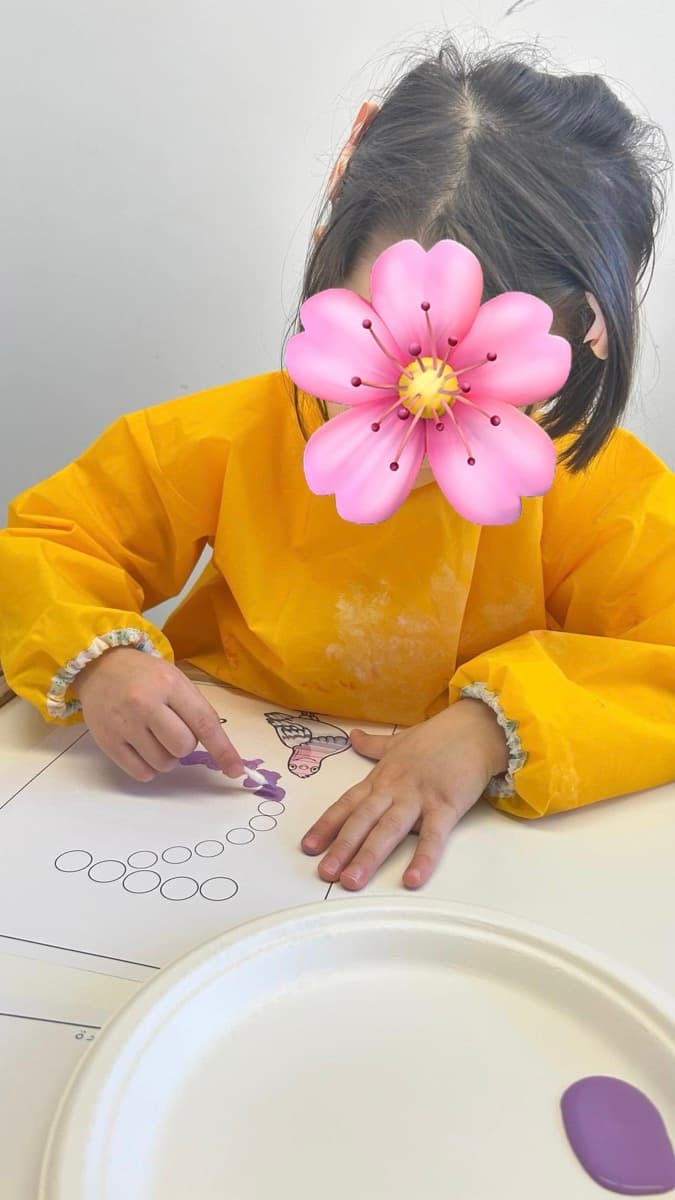
Alongside play, children now receive short, explicit lessons, especially in early reading. A typical day mixes whole-group carpet time, small-group instruction, learning centres (blocks, sand, art, dramatic play, reading corner), outdoor play and meals.
Inquiry in practice
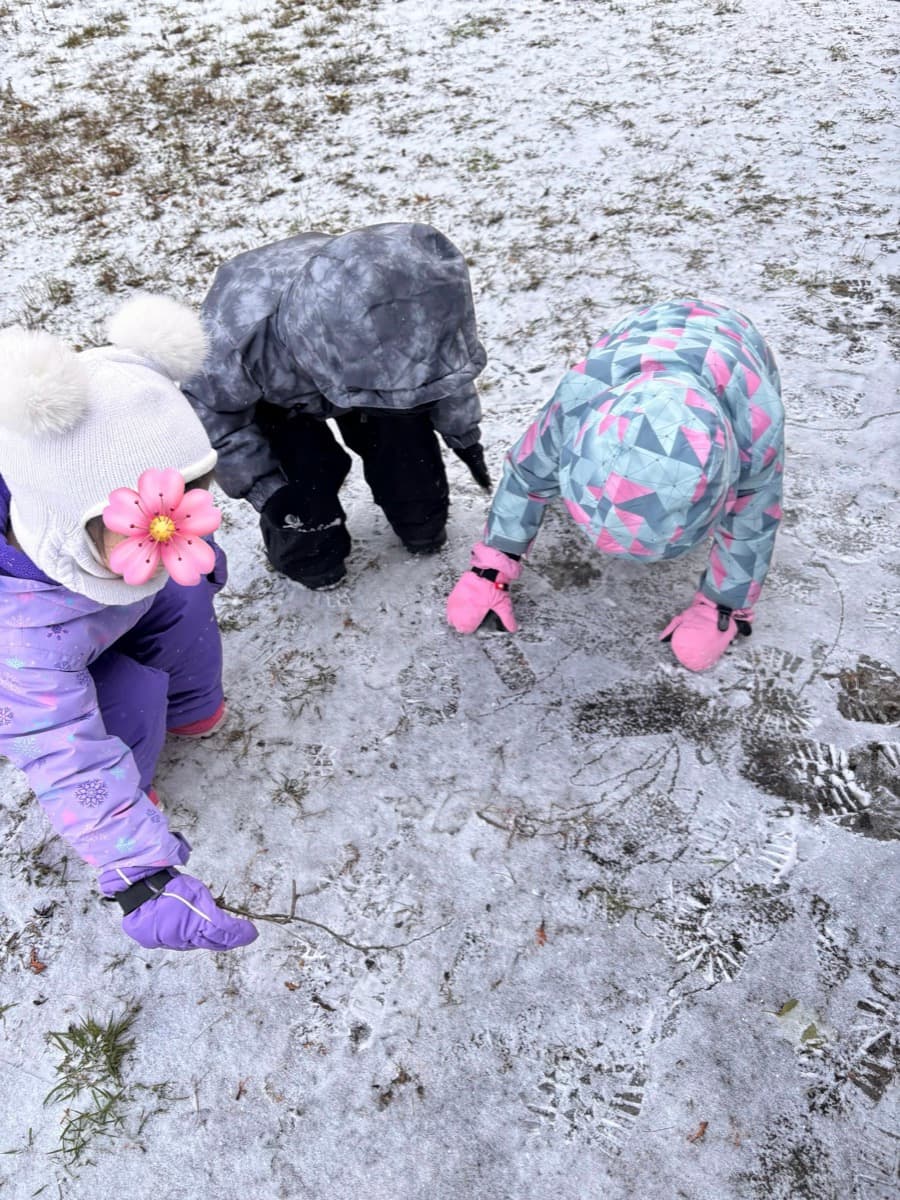
Inquiry is a structured way of following children's questions. If a group becomes fascinated by puddles after a rainstorm, educators might help them predict where water goes, measure puddles, draw what they see and share their findings. The curriculum names three phases: initial engagement, investigation and communication.
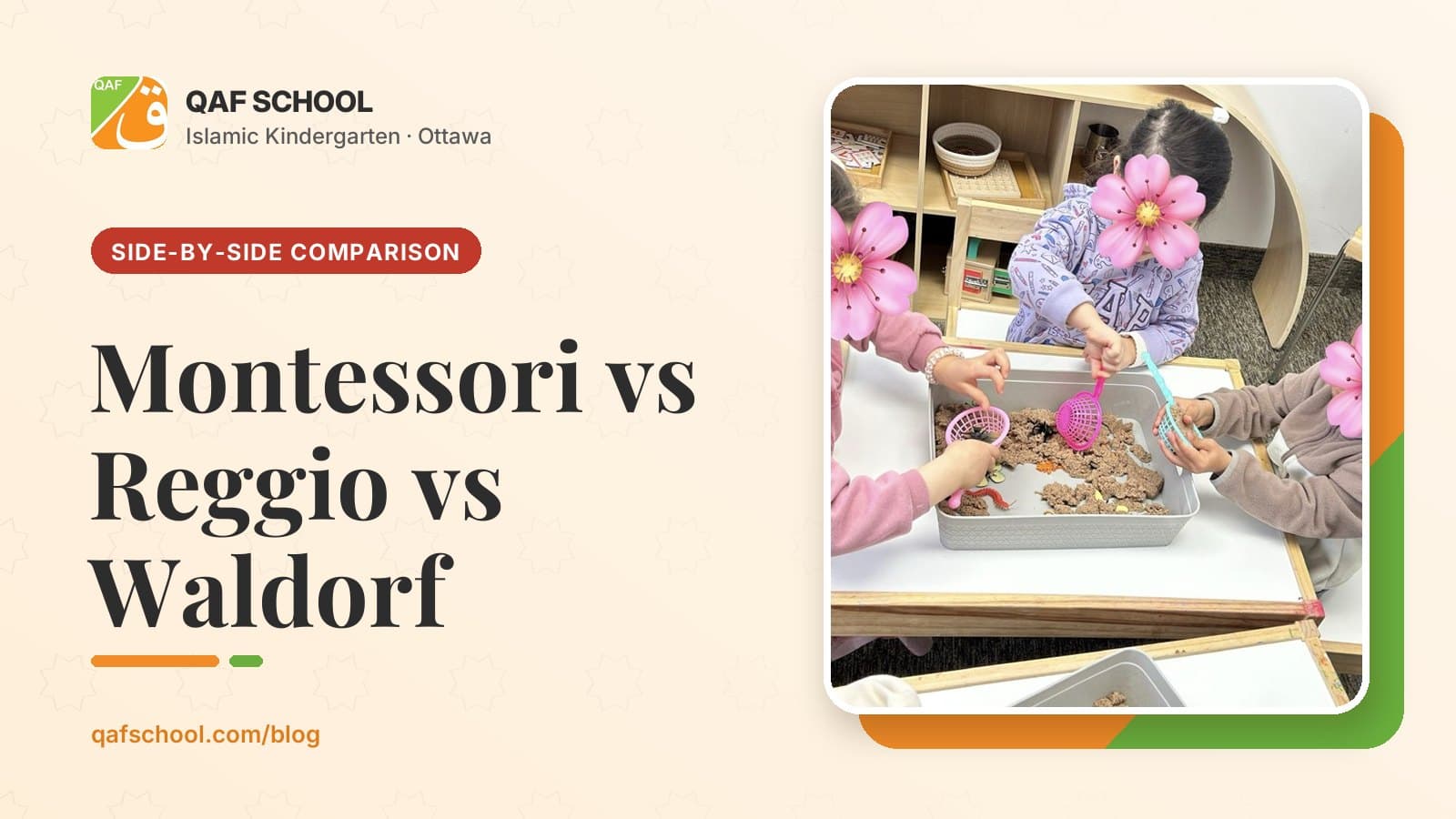
If you are curious how Ontario's approach compares with named philosophies, see our Montessori vs Reggio vs Waldorf comparison.
Who teaches your child: the educator team
In Ontario kindergarten classes with more than 16 children, an educator team of a teacher and an early childhood educator works together all day.
- The teacher is certified by the Ontario College of Teachers and is responsible for instruction, evaluation and formal reporting to parents.
- The early childhood educator is a Registered Early Childhood Educator (RECE), a protected title regulated by the College of Early Childhood Educators. ECEs bring deep training in child development and plan activities that support physical, cognitive, language, emotional, social and creative growth.
Both educators observe children, document learning (photos, notes, work samples) and plan next steps together. In practice, children treat them as equal adults in the room, and parents can speak to either one.
What children learn in JK and SK
Here is what learning in each strand typically looks like across the two years. Every child progresses at their own pace; these are directions of growth, not checklists.
Strand A: Foundations of Language and Mathematics
- Speaking in full sentences, retelling stories, asking and answering questions
- Naming upper- and lowercase letters and forming them correctly
- Hearing, blending and separating sounds in words
- Matching letters to sounds and reading and spelling simple words
- Counting, comparing and estimating quantities to 20; adding and subtracting within 10
- Recognizing and making patterns; sorting objects by one attribute
- Describing 2D shapes and 3D objects, and giving and following directions
- Comparing length, mass and capacity
Strand B: Problem Solving and Innovating
- Asking questions and making predictions
- Testing ideas through simple investigations and building
- Following and creating sequences of steps, an early form of coding
- Expressing ideas through art, music, drama and construction
Strand C: Self-Regulation and Well-Being
- Naming feelings and using strategies to calm down
- Taking turns, waiting and focusing for longer periods
- Developing independence in routines like dressing and eating
- Moving with confidence: running, balancing, climbing, throwing
Strand D: Belonging and Contributing
- Building friendships and cooperating in groups
- Developing a sense of identity, including family, culture and language
- Showing care for others and the environment
- Recognizing that they belong to a classroom and a wider community
Ontario's curriculum also expects educators to weave First Nations, Métis and Inuit perspectives across the program.
Communication of Learning: kindergarten report cards
Ontario's kindergarten report card is called the Communication of Learning. Children are not given letter grades or marks. Instead, educators write comments about each child's key learning, growth and next steps.
Families receive three formal reports each school year:
- Initial observations report, sent between late October and November, summarizing how your child has settled and early evidence of growth.
- Two further Communication of Learning reports later in the year.
Each report is organized around the four areas of learning: foundations of language and mathematics, problem solving and innovating, self-regulation and well-being, and belonging and contributing. Catholic boards add a religious and family life education section.
Reading screening in SK
Ontario's publicly funded schools also carry out an early reading screening for children in Year 2 of Kindergarten. A screener is a quick check, not a test your child passes or fails. It helps educators spot children who might need extra reading support early, when it is most effective.
Tip: When the initial observations report arrives, look for the "next steps" in each section. They tell you exactly what to practise at home this term, and they make a perfect starting point for a parent-teacher conversation.
How families can support kindergarten learning at home
You do not need worksheets or flashcards. Short, playful moments every day matter far more. Here are ideas matched to each strand.
Language and math (Strand A)
- Read aloud daily and talk about the pictures. Stop to ask "What do you think will happen?"
- Play sound games: "I spy something that starts with /m/."
- Count real things: stairs, apples in the bag, forks on the table.
- Cook together; measuring and sharing food equally is early math.
- Speak your home language richly. Strong first-language skills transfer to English and French. Families raising children in several languages can read our guide to raising trilingual kids in Canada.
Problem solving (Strand B)
- Answer a question with a question: "How could we find out?"
- Give open-ended materials: boxes, tape, blocks, play dough.
- Try simple "if–then" games, like giving step-by-step directions to reach a hidden toy.
Self-regulation (Strand C)
- Keep a predictable bedtime and morning routine.
- Name feelings out loud, including your own.
- Practise calming strategies together, like slow breathing or a quiet corner.
Belonging (Strand D)
- Give your child real jobs at home: setting the table, feeding a pet.
- Talk about your family's story, culture and faith.
- Visit your local library, park or community centre together.
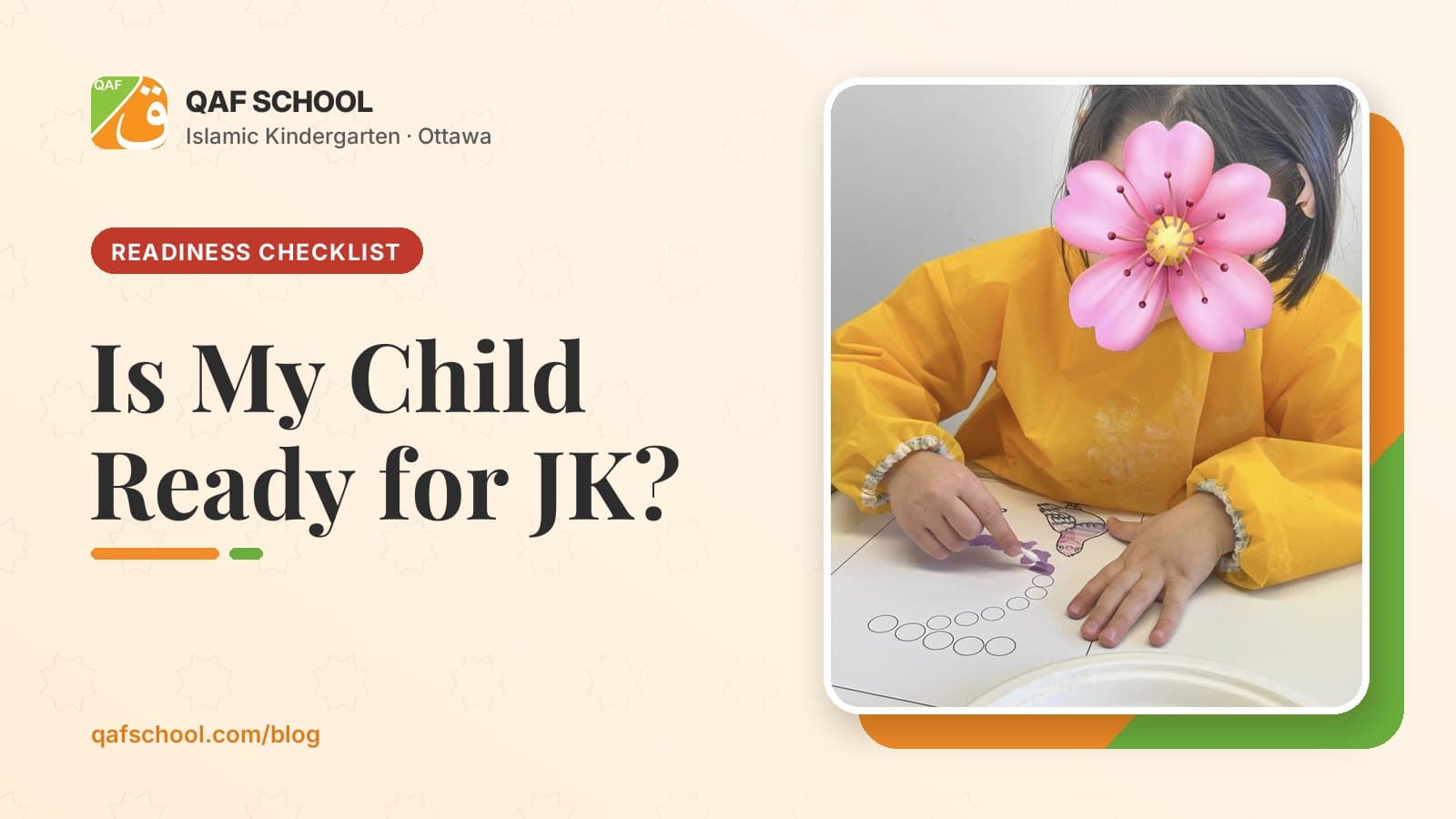
Ontario also offers free parent resources for preparing for kindergarten, including first-day eBooks and an activity book. For the practical skills that make the first weeks easier, see our JK readiness checklist.
Private and Islamic kindergartens and the Ontario curriculum
Private schools in Ontario, including Islamic schools, are not inspected by the ministry and do not need to follow the provincial curriculum at the elementary level, which includes kindergarten. Many choose to align with it so that children can move smoothly into Grade 1 at any school. When you tour a private program, ask how closely it follows the Ontario curriculum, how reading is taught and how progress is reported.
At QAF School in Ottawa, our full-day Islamic JK and SK program is aligned with Ontario's Kindergarten Program and its four areas of learning, combined with a Montessori-inspired morning work cycle, daily Arabic immersion, Quran, duas and adab. Parents follow daily learning through ClassDojo. You can see how the pieces fit on our program page, and read about what comes next in preparing your child for Grade 1. For a broader comparison of options, see Islamic school vs public school in Ontario.
The bottom line
The Ontario Kindergarten Program is still built on play, inquiry and care for the whole child. What changed in 2026 is that early reading, writing and math are now taught more directly, with clearer expectations in every classroom. For parents, the best support is simple: read together, talk a lot, count everyday things, keep routines steady and stay in touch with your child's educators.
Looking for an Ontario-aligned kindergarten with Islamic learning built in? QAF School offers full-day Islamic JK and SK at 900 Dynes Rd in Ottawa. Submit an inquiry to book a visit and see a morning in our classroom.