Choosing Ottawa schools for Arabic-speaking families comes down to three questions: how Ontario schooling differs from what you knew back home, how your child will keep Arabic, and how much faith you want built into the school day. Whether you arrived from the Gulf, the Levant, Egypt or North Africa, you are not alone here. In the 2021 census, Statistics Canada found that Arabic was the most common non-official language spoken at home in Ottawa–Gatineau. This guide covers the cultural and practical side of school for Arab families, from kindergarten play to Eid absences.
Key takeaways
- Ontario kindergarten is play-based. Expect less homework and fewer worksheets than many Arab-world schools, and strong learning through play, talk and inquiry.
- English boards teach kindergarten in English and French. French-speaking North African families may also qualify for French-language boards.
- Keep Arabic strong at home. The OCDSB's free International Languages program offers Arabic for JK to Grade 8 on Saturdays and online.
- Ottawa boards accommodate Eid absences and prayer, but they do not teach Quran or Arabic. That comes from home, a weekend program or an Islamic school.
- Speak up early. Teachers welcome questions, and Arabic-speaking Multicultural Liaison Officers can help.
Ottawa schools for Arabic-speaking families at a glance
Every country and every school is different, so this is not a comparison with any one system. It is a quick list of the things Arab parents in Ottawa most often tell us surprised them.
| Topic | What to expect in Ottawa public schools | What to do |
|---|---|---|
| Start age | JK in the calendar year a child turns 4; school is required from age 6 | Check your child's birth year, not their age in September |
| Kindergarten style | Play-based, with reading and math woven into play | Ask the teacher how play builds literacy |
| Homework | Little or none in kindergarten and early grades | Read together daily instead |
| Grading | Kindergarten reports use written comments, not marks | Read the comments closely and ask questions |
| Language | English boards: kindergarten 50% English, 50% French | Keep Arabic at home; don't switch to broken English |
| Religion | Secular (OCDSB) or Catholic (OCSB); Islamic schools are private | Decide where Quran and Arabic will come from |
| Classes | Mixed boys and girls throughout | Ask about phys ed and swimming if you have concerns |
| Teacher contact | Email, apps and interviews; questions are expected | Book a meeting early in the year |
How Ontario kindergarten differs from what you may expect
Many Arab families arrive expecting kindergarten to look like early school: desks, notebooks, letters copied neatly, homework every night. Ontario kindergarten looks different on purpose.
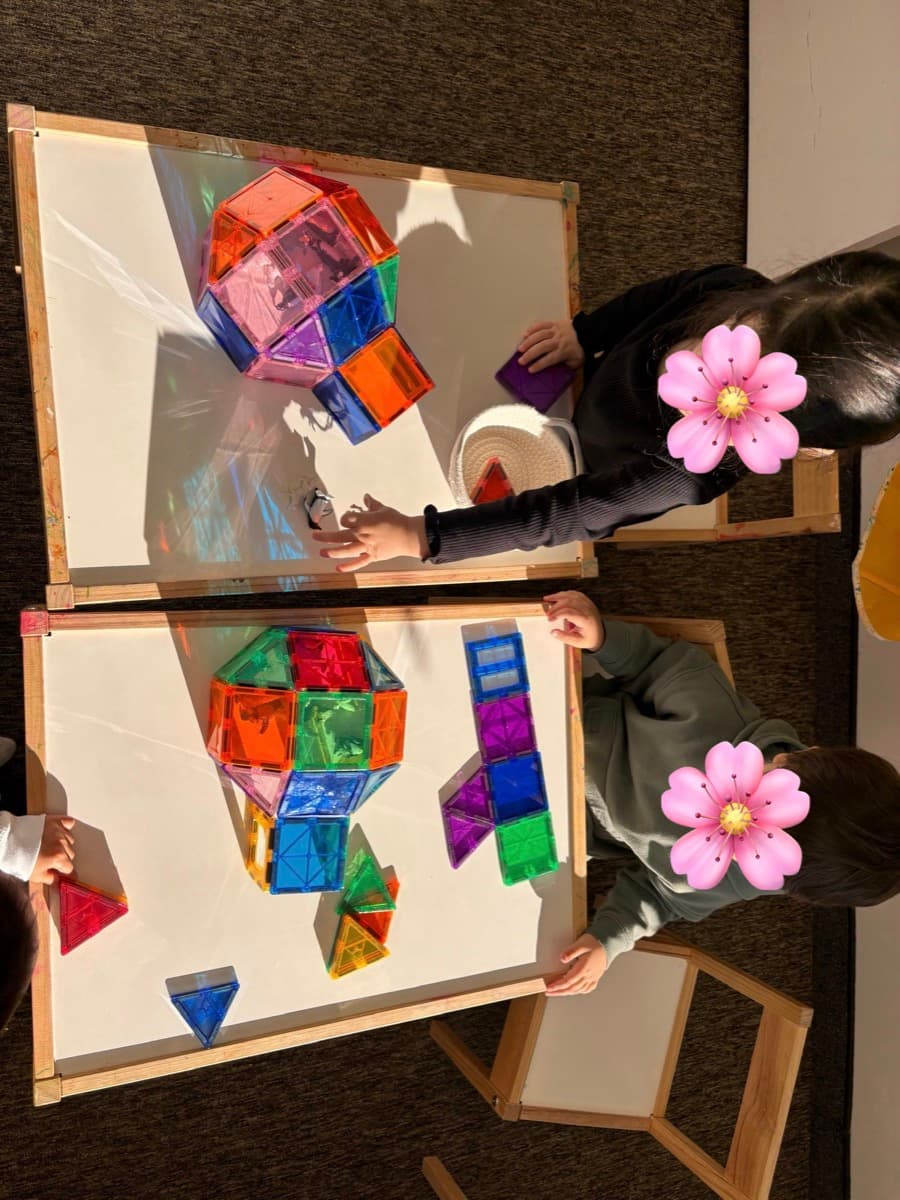
Since September 2026, every kindergarten class in Ontario follows The Ontario Curriculum, Kindergarten, 2026, organized into four strands: Belonging and Contributing, Self-Regulation and Well-Being, Foundations of Language and Mathematics, and Problem Solving and Innovating. Children learn letters and numbers, but much of it happens through building, drawing, pretend play, songs and conversation. Our explainer on the Ontario kindergarten curriculum goes deeper.
What this means at home: if your child comes home and says "we played all day," that is normal and usually good news. Ask instead, "What did you build? What did you count? What story did you hear?" You will hear more learning than you expect.
If you want more structure in the early years, some families choose a Montessori-inspired setting, which blends hands-on work with clear routines and a long, focused morning work period.
Language: English, French and Arabic
English and French in the school day
Ottawa's two English boards, the OCDSB and the OCSB, run full-day kindergarten that is about half English and half French. Your child does not need French at home. Many Arab children in Ottawa end up learning three languages at once, and they cope well when each language has a clear place.
For French-speaking families from North Africa and Lebanon
If French is a strong language in your family, look at the two French-language boards, CEPEO and CECCE. Children of French-language rights holders are admitted automatically, and that status requires Canadian citizenship. Families who are not yet citizens can apply through each board's admission committee. Our Ottawa school boards comparison explains both routes. If you live in Gatineau, remember that Quebec's school rules are different from Ontario's.
Keeping Arabic alive
The biggest risk for Arab children in Ottawa is not English. It is losing Arabic. Children quickly learn that English is the language of school and friends, and many stop answering in Arabic by Grade 2 or 3.
What helps:
- One clear home language. Speak Arabic at home consistently, even if your child replies in English.
- Reading, not just speaking. A child who speaks a dialect at home still needs to learn to read and write Arabic. Our guide on Fusha vs dialect helps you decide what to teach.
- A weekly class. The OCDSB's International and Indigenous Languages elementary program lists Arabic for JK to Grade 8 students from any board in 2026–2027. In-person classes run Saturday mornings from 9:30 to 12:00 at OCDSB schools, with virtual Saturday and after-school options. The in-person activity fee is $20 for Ontario residents. Check current fees and dates before you register.
For a full list of local options, see our guide to Arabic classes for kids in Ottawa, and for children who speak Arabic but can't read it, our post on heritage Arabic speakers.
Faith at school: what to expect
Public schools
Ottawa's public boards accommodate religious practice. The OCDSB publishes a calendar of religious and creed-based days of observance and asks schools to avoid scheduling tests, events and field trips on those dates. For 2026–27 it lists Eid al-Fitr as March 9–11 or March 10–12, 2027, depending on moon sighting. Students can also ask for time and space to pray.
What public schools will not do is teach Quran, Arabic or Islamic Studies. Lunchrooms, celebrations and classroom routines will reflect a diverse, mostly non-Muslim community. Many families are comfortable with this when faith is strong at home and on weekends.
Islamic schools
An Islamic school builds salah, duas, Quran and Arabic into the day, and your child's teachers share your values. The trade-offs are tuition, the commute, and the need to check how each school aligns with the Ontario curriculum. Our guide to Islamic schools in Ottawa compares local options, and Islamic school vs public school in Ontario weighs both fairly.
Working with your child's teacher
In many Arab-world schools, parents respect the teacher's authority and stay at a distance. That respect is valued here too, but Ontario teachers also expect parents to ask questions and share what they know about their child.
Ontario has rules on this. Under the province's Policy/Program Memorandum 170, every school board must have a protocol for parent inquiries and acknowledge them within two business days.
Practical tips:
- Email is normal. A short, polite email to the teacher is the expected way to raise a question.
- Share context. Tell the teacher which languages your child speaks, how long you have been in Canada, and anything about prior schooling.
- Ask for an interpreter. Both English boards work with OCISO's Multicultural Liaison Officers, and many speak Arabic. Ask the school office.
- Attend interviews. Parent-teacher interviews are not a sign of trouble. They are routine.
A short school vocabulary for Arab parents
These terms appear in emails and notices. Keeping them handy makes the first year much easier.
| English term | Arabic | What it means here |
|---|---|---|
| School board | مجلس مدرسي | The organization that runs a group of public schools |
| Junior Kindergarten (JK) | الروضة الأولى | First year of kindergarten, age 4 |
| Senior Kindergarten (SK) | الروضة الثانية | Second year, age 5 |
| Principal | مدير المدرسة | Head of the school |
| Early Childhood Educator (ECE) | معلّمة الطفولة المبكرة | Works with the teacher in kindergarten |
| Report card | التقرير المدرسي | Written progress report |
| PA Day | يوم تطوير مهني | No school for students; teachers train |
| Recess | الاستراحة | Outdoor break, in most weather |
| Permission form | استمارة موافقة | Your signature for a trip or activity |
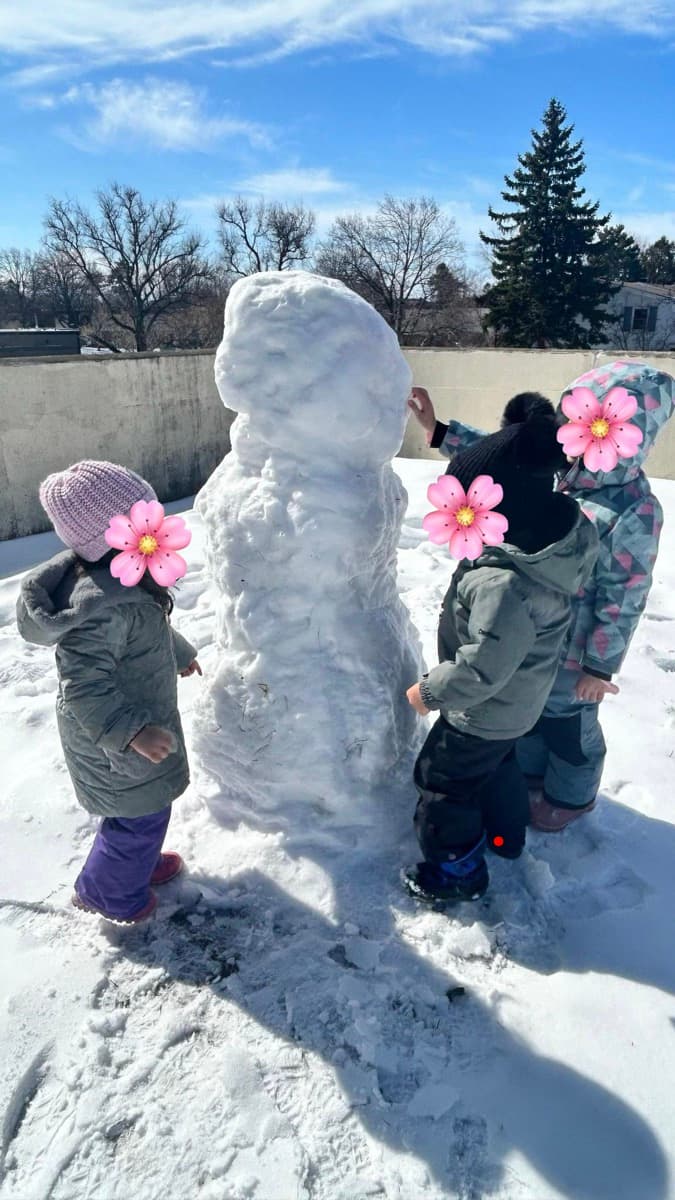
Tip: Ottawa children play outside at recess in winter. A snowsuit, boots and mittens are essential, not optional.
Older children: ages 8 to 15
Many Arab families arrive with children of different ages. Older children usually attend public school during the week, and families add Quran and Arabic on weekends. Our list of weekend Islamic schools in Ottawa covers options by area.
At QAF, our Sunday Camp serves ages 8 to 15 on Sundays from 11 AM to 3 PM at 900 Dynes Rd in Nepean. It combines Quran, Arabic reading and writing, math and STEM, and soccer, in junior and senior classes, for $190 a month from September to June. It suits children who speak Arabic at home but need to read and write it properly, as well as non-Arab classmates starting from scratch.
Is QAF right for your family?
QAF is a full-day Islamic kindergarten for ages 4 and 5 at 900 Dynes Rd in Nepean, near Prince of Wales Drive. The day runs 9:00 AM to 3:00 PM, Monday to Friday, September to June, with daily Arabic immersion, short surahs from Juz Amma, Islamic Studies and a Montessori-inspired classroom aligned with Ontario's kindergarten curriculum. Tuition is $690 a month for 10 months plus a $190 annual resource fee.
It suits Arab families who want their young child to keep Arabic as a living, daily language while also getting ready for English-language Grade 1. It works best for families in Nepean, Barrhaven, Riverside South and nearby areas.
It is not the right fit if your child is 6 or 7, if you need free school, or if a daily drive to Nepean is unrealistic. In that case, public kindergarten plus Saturday Arabic and our Sunday Quran and Arabic camp in Ottawa for older siblings may be the better plan. See our Islamic JK/SK program for details.
Conclusion
Ottawa is one of the easier Canadian cities for Arab families to settle in: a large Arabic-speaking community, free schools that accommodate faith, and real options for Arabic and Quran. The key is to be intentional. Understand the play-based approach, choose a clear plan for Arabic, decide where faith fits in the week, and build a relationship with your child's teacher early.
Have a 4- or 5-year-old? Visit QAF and hear Arabic and Quran in a real Ottawa classroom. Submit an inquiry to book a visit, or message us on WhatsApp with your questions.